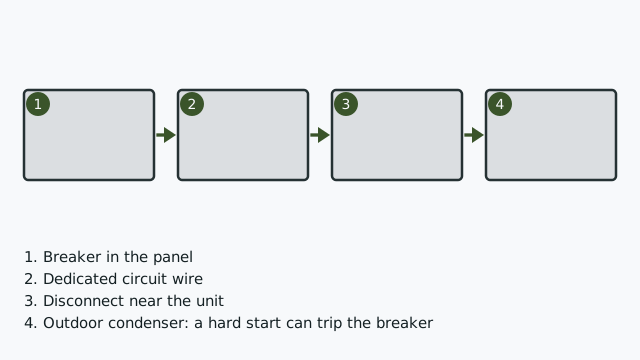
An air conditioner trips a breaker when it draws more current than normal or leaks current. In a central system, the cause is often a dirty coil or filter that makes the compressor work harder, a failing motor or capacitor, or a worn breaker. In a window unit, it is often a shared circuit or damaged cord. Check the filter, then stop and call for help.
This article is about air conditioners specifically. For the general causes of tripping, read the main guide on a circuit breaker that keeps tripping. Here you will find what is safe to check, what an HVAC technician or electrician checks, and when to call. Stockton summers push AC hard, so a local Stockton electrician is often called at the first hot week.
Why does an air conditioner trip the breaker?
An air conditioner trips a breaker because its compressor and fan motors draw a high start surge and keep drawing high current when anything makes them work harder. Dirty coils, low airflow, a failing motor or capacitor, and a wrong-size breaker can all push current past the limit. A short or ground fault in the unit or its wiring can too.
The causes divide into three groups:
- The AC is working too hard. A clogged filter, a dirty indoor or outdoor coil, a blocked outdoor unit or very hot weather make the compressor run longer and draw more current. Trips often come on the hottest afternoons.
- A part is failing. A worn compressor, a weak fan motor or a bad start or run capacitor can draw extra current or fail to start. Regular filter changes and coil cleaning are basic maintenance for this reason.
- The circuit is the problem. A window unit on a shared circuit with other loads, a loose connection at the disconnect or breaker, or a breaker that is worn can all trip with a healthy AC.
Because the AC is a dedicated heavy load, tripping often means one of these rather than a general home wiring fault. That is the difference from the general breaker tripping page, which covers every type of circuit.
What can you safely check on a central air conditioner?
Switch the thermostat to off, then check the filter, the outdoor unit and the thermostat. Replace a dirty filter, clear leaves and debris from around the outdoor unit and make sure vents are open. Do not open electrical panels or the outdoor unit's wiring. Reset the breaker once after these checks and see if the AC runs.
Safe checks:
- Filter. A clogged filter cuts airflow and can freeze the indoor coil. Replace it.
- Outdoor unit. Clear leaves, grass and clutter. Keep space around it so air moves through. Gently rinse fins with a garden hose only with the power off.
- Vents and returns. Open vents and clear returns.
- Thermostat. Set it to cool and a reasonable temperature rather than the lowest setting.
- Wait. If the system was just shut off, wait several minutes before restarting. Restarting while pressure is high can strain the compressor.
If the breaker trips again right away, or after a few minutes of running, stop. Do not keep resetting. A repeat trip is a sign of a fault, and each reset puts stress on the compressor and the wiring.
What do HVAC technicians and electricians check?
An HVAC technician checks the compressor, fan motors, capacitors, refrigerant side and coils. An electrician checks the circuit, breaker, disconnect, wiring and connections. Capacitors, contactors and compressors carry stored energy or high voltage, so they are work for people with the training and tools, not for homeowners.
What each looks at:
- Dirty coils. A technician cleans the indoor and outdoor coils properly. Heavy dirt makes the unit run hot and draw extra current.
- Compressor. A failing compressor can draw very high current or short to ground. It is a major repair and often decides whether to repair or replace the unit.
- Capacitors and fan motors. A weak capacitor makes a motor draw more current and fail to start. Technicians test and replace capacitors. A capacitor can hold a charge even when power is off, so homeowners should not touch one.
- Breaker and disconnect. An electrician can test whether the breaker is the right size and in good shape. A breaker that is too small trips under normal load, and one that is too large is a fire risk. Do not change the size yourself.
- Wiring and connections. Loose or burnt connections at the disconnect, contactor or breaker produce heat and sometimes arcing.
Many AC faults need both trades. The HVAC side finds a failing component, and the electrical side confirms the circuit is sound. If the unit shows signs of a refrigerant or compressor issue, start with HVAC. If the breaker, panel or wiring looks suspect, start with an electrician.
Why does a window or portable air conditioner trip the breaker?
A window air conditioner often trips a breaker because it shares a circuit with other loads, uses an extension cord, or has a damaged plug or cord. Plug it into a dedicated outlet on its own circuit if you can, and never use a power strip or light extension cord. A GFCI or AFCI on the circuit can also trip from moisture or a worn cord.
Check these first:
- Is anything else on the same circuit, such as a TV, a microwave or a space heater?
- Is the cord warm, frayed or the plug discolored? If so, stop using it.
- Is the unit draining water into the outlet area? Moisture trips a GFCI.
- Is the unit the right size for the circuit? A large window unit on a 15 amp circuit with other loads can overload it.
A camper or RV air conditioner works the same way on a smaller scale. A campground pedestal or a shore power cord may supply less current than the AC and its start surge need, so it trips when other loads run. Turn off other appliances before starting the AC.
The page on AFCI versus GFCI explains why those breakers trip with some motor loads and damaged cords.
Is the breaker the wrong size or worn out?
Sometimes. A breaker that has worn out or has been tripped many times can trip below its rating, and a loose or hot breaker is a warning sign. Never replace an AC breaker with a larger one. Wire size and the unit's nameplate set the maximum, and a larger breaker can let wires overheat without tripping.
Look at the nameplate on the outdoor unit. It lists the minimum circuit ampacity and the maximum overcurrent protection. An electrician compares those to the breaker and wire. If the breaker is hot to the touch, buzzes, or smells burnt, switch off the AC and leave the breaker off. The breaker repair cost page shows what replacing one usually costs, roughly $150 to $400 in national price guides.
When should you call an electrician, an HVAC pro or 911?
Call 911 for smoke, fire, sparks, a burning smell from the unit or panel, or a shock. Call an HVAC technician if the breaker trips only when the AC runs and the filter and coils are clean. Call an electrician if the breaker trips with the AC off, the breaker or disconnect is hot, or the panel shows damage.
A quick guide:
| What you notice | Who to call |
|---|---|
| Smoke, flames, sparks, shock | 911 |
| Breaker trips only when AC starts, filter clean | HVAC technician |
| Breaker trips with AC off, hot breaker or panel | Electrician |
| Burn marks at the disconnect or outlet | Electrician, power off first |
| Wires down or a utility problem outside | PG&E |
California law requires electrical work done for others to be performed by a contractor holding a C-10 electrical license, and refrigerant work has its own certification rules for technicians. Both trades can quote the job once they see it. See how to choose an electrician for what to ask. If the AC trips every summer, the panel or circuit may be at its limit, and an electrical panel upgrade may come up.
Questions people ask
How long does it take to fix an air conditioner that keeps tripping the breaker?
A filter or debris fix takes minutes. A technician can often test and replace a capacitor in about an hour. Replacing a breaker or fixing a loose connection is usually under an hour. A compressor or motor failure takes longer and may lead to replacing the unit. The technician can give a time estimate after testing.
What should I ask before I hire someone for an AC that trips the breaker?
Ask whether they check the circuit and the unit or only one. Ask for the C-10 license number for electrical work and verify it on the CSLB site. Ask about the visit fee, what is covered, and what happens if the AC still trips. Ask for the breaker and wire size to be compared with the unit nameplate.
Do I need to be home when the AC is checked?
Usually you need to be there to give access to the outdoor unit, indoor unit and panel, and to describe when it trips. Power to the AC or other circuits may be off during testing. Make sure pets are secured and the outdoor unit is reachable.
Can a dirty air filter trip the breaker?
Yes, indirectly. A clogged filter cuts airflow, the coil can freeze and the compressor works harder and draws more current. That can push it past the breaker rating. Replacing a dirty filter is the safest first step.
Is it safe to keep resetting the breaker so the AC works?
No. A breaker that trips again and again is reporting a fault, and a fault can overheat wiring or damage the compressor. Reset once after basic checks. If it trips again, leave the AC off and call for help. In summer heat, plan ahead for cooling while you wait.
Sources used
Last changed