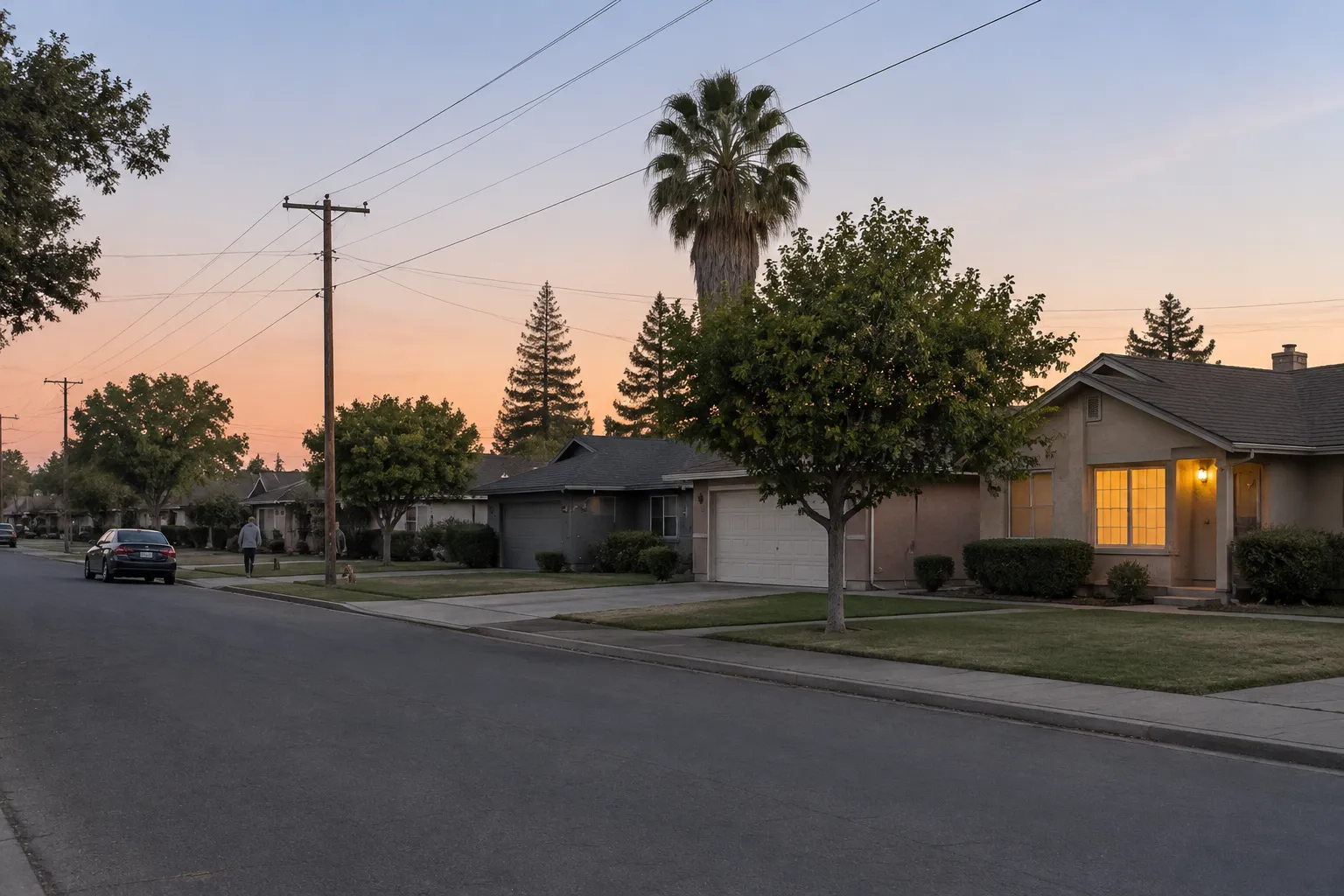
If your power goes out in Stockton, first look at whether your neighbors are dark too. If they are, the outage is on the utility's side, and PG&E is the one to report it to and wait for. If only your house is dark, the cause is often a tripped breaker or a fault inside your wiring, and a local electrician can help. If you see a downed line, sparks, smoke or fire, call 911 first. For an electrician near Stockton, the quote form is the place to start once you know it is a house problem.
Is it a PG&E outage or a problem in your house?
It is a utility outage when your neighbors also have no power, street lights are out or PG&E's outage map shows an outage near you. It is a house problem when only your home, or only part of it, is dark. PG&E's own advice is to check whether neighbors are affected and to check your breakers before calling.
A quick way to sort it:
| What you see | Most likely cause | Who to call |
|---|---|---|
| Whole street or area dark | Utility outage | Report to PG&E and check its outage map |
| Only your house dark, panel looks normal | Utility service to your meter, or a main breaker | PG&E first, then an electrician if the main breaker is the cause |
| Part of the house dark | Tripped breaker, GFCI or a failed circuit | Reset safely, then an electrician if it repeats |
| Sparks, burning smell or a fallen line | Hazard | 911, then PG&E |
The utility is responsible for its own lines and equipment, while the wiring and panel inside your house are yours. That split decides who fixes what. When in doubt, report the outage to PG&E anyway; it costs nothing, and it helps the utility see the size of the problem. PG&E lists a 24-hour outage reporting line and an outage map on its website, so use the number printed on pge.com/outages.
An electrician cannot restore a utility outage. A residential electrician works on your side of the meter. Hiring one for a street-wide outage wastes money, which is why this check comes first.
What can you safely check yourself?
You can safely look at your breaker panel, reset a tripped breaker once and press the test and reset buttons on GFCI outlets in kitchens, bathrooms and garages. Do not open the panel cover, touch wiring or stand in water. If a breaker trips again immediately, leave it off and call an electrician.
Steps, in order:
- Check whether neighbors have power, and look at PG&E's outage map.
- Stand dry, in good light, in front of the panel. Look for a breaker in the middle position or marked off.
- Switch a tripped breaker fully off, then on. Do it once.
- Check GFCI outlets for a tripped reset button.
- Unplug or turn off appliances. PG&E advises this during an outage, because it helps avoid overloading circuits when power returns.
If the breaker trips again, the cause is a fault, not bad luck. Read breaker keeps tripping for the usual reasons. Do not tape a breaker on or swap it for a larger one. Do not touch anything wet or scorched. If you smell burning, see smoke or hear buzzing from the panel, leave the house and call 911.
For food, PG&E suggests freezing water in plastic containers ahead of time so they act as ice blocks.
What should you do about a downed power line?
Assume every downed line is live, stay away, keep everyone including pets back and call 911 immediately. Then call PG&E. PG&E's guidance is never to touch a downed line, never to touch anyone or anything in contact with it, and not to drive over it. Do not try to move it with a stick or a tool.
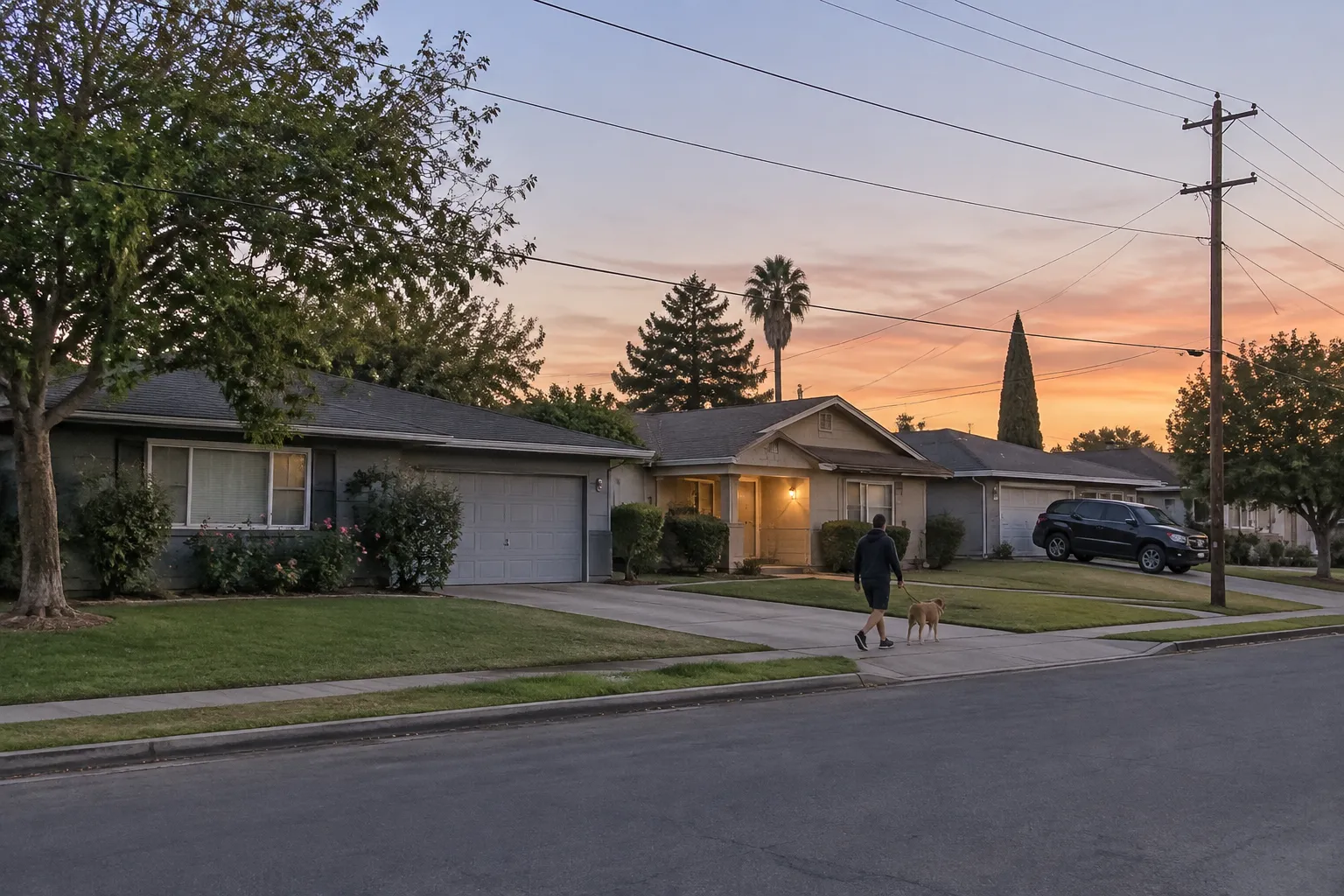
Ground near a downed line can also carry current, so keep well back and do not walk toward it to look. A fallen tree or branch touching a line is just as dangerous. The same goes for a service line torn off your house by a storm: that is a hazard for the utility, not a repair for an electrician to attempt first.
This is one of the few situations where speed matters more than price. An emergency electrician cannot make a live utility line safe. PG&E and the fire department can. After they clear the hazard, a local electrician may need to repair damage to the mast, meter base or panel on your side before the utility reconnects. Some repairs need a permit and a local inspection before the utility reconnects, so ask the electrician about the permit.
Can you run a generator during an outage?
Yes, but only outdoors and only if it is set up safely. Portable generators produce carbon monoxide, which can kill. The U.S. Consumer Product Safety Commission says to run a portable generator outdoors, at least 20 feet from your home with the exhaust pointed away, and never in a garage or inside, even with doors open.
Other rules to follow:
- Never plug a generator into a wall outlet to power the house. That can send power back onto the utility's lines and injure utility workers.
- Plug appliances straight into the generator with heavy-duty cords, or have a transfer switch installed.
- PG&E advises having a qualified electrician install a generator connection, because an improper installation is dangerous for your family and for utility crews.
- Install working carbon monoxide alarms in your home.
Installing a standby generator or a transfer switch is permitted electrical work. California law requires a contractor holding a C-10 electrical license, and it usually needs a permit. Quotes depend on the unit and the house, so ask for a written price.
When should you call an electrician after an outage?
Call an electrician when the power is out in your house only, when breakers keep tripping, when something is scorched, melted or buzzing, or when storm damage touched your meter, mast or panel. These are residential faults that the utility will not fix for you. Call 911 first if there is fire, smoke or someone hurt.
After a storm or surge, ask for:
- A check of the panel and the main breaker.
- Testing of outlets and GFCI protection.
- An assessment of surge damage, and whether a whole-house surge protector makes sense.
Some businesses advertise emergency electrical services at all hours, and some list an Emergency Service rate separately from standard rates. That can help if a hazard cannot wait, but it costs more than a weekday visit. A same day visit for a smaller fault may be an option; read same day electrician for what that realistically means. For the price side, see emergency electrician prices.
Before you hire anyone for emergency electrical repairs, check the CSLB license record. CSLB says to confirm the license status, ask for proof of workers' compensation insurance and be wary of large upfront payments. How to choose an electrician has the full list.
Who do you call when it is not a true emergency?
If nobody is in danger and there is no smoke, fire or downed line, use the non-emergency routes: PG&E's outage line or website for the utility, and the City of Stockton's published non-emergency police line for other safety concerns. Check stocktonca.gov for the current number; it is not listed here because it can change. Use 911 only for danger.
A few examples of non-emergencies: one dead outlet, a light that flickers, a breaker that tripped once, a smoke alarm that chirps, a room that lost power while the rest of the house is fine. Book a normal visit through the quote form and see what happens next.
How much does an emergency electrician cost?
An emergency electrician typically bills more than a weekday visit. National price guides show $50 to $130 an hour for standard residential work, a service call fee of about $100 to $200, and an after-hours add-on of $100 to $200 or roughly 1.5 to 2 times the rate. Some electricians charge a minimum.
These are guide figures, not a Stockton quote, and the electrician's own written estimate overrides them. The emergency price page breaks them down further. For everyday jobs, electrician cost in Stockton lists typical ranges.
Questions people ask
Is a power outage an electrical emergency?
Not by itself. A street-wide outage is a utility matter, and PG&E restores it. It becomes an emergency if there is a downed line, smoke, sparks, a burning smell or someone is hurt. In those cases call 911 first. A house-only outage is an electrician matter but usually not an emergency.
Who fixes a power outage, PG&E or an electrician?
PG&E fixes outages on its own lines and equipment. An electrician fixes faults on your side: the panel, breakers and house wiring. Check whether neighbors have power, report the outage to PG&E and look at your panel. If the neighbors are fine, a local electrician can diagnose it.
Is it safe to reset a tripped breaker?
Usually yes, once. Stand dry, switch the breaker fully off, then on. If it trips again at once, leave it off and call an electrician, because the cause is a fault. Never hold a breaker on, tape it or fit a bigger one. If the panel is hot, scorched or buzzing, leave the house and call 911.
Can I use a generator inside the garage if the door is open?
No. The CPSC says never to run a portable generator inside a home or garage, even with doors and windows open, because carbon monoxide builds up quickly. Run it outdoors at least 20 feet away with the exhaust pointed away from the house, and use working carbon monoxide alarms indoors.
Can an electrician work on a downed power line?
No. Downed utility lines are handled by PG&E and emergency responders. Stay back, keep others away and call 911, then PG&E. An electrician can repair your own meter base, mast or panel once the utility has made the line safe, and that work may need a permit.
Read on
- Emergency electrician cost
What an emergency electrician costs: published hourly ranges, after-hours multipliers, minimum charges and what to ask before you agree to…
Sources used
Last changed