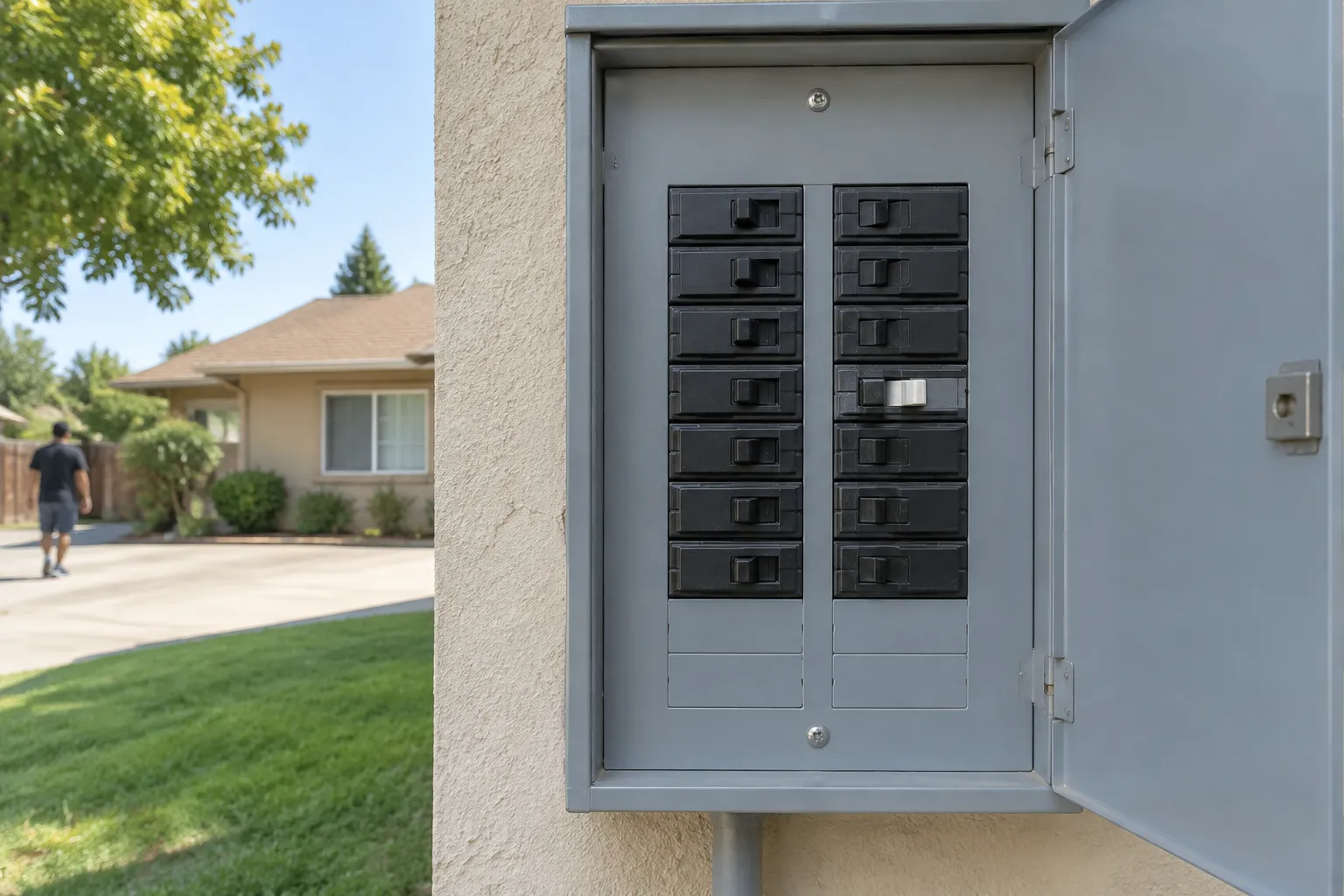
When a circuit breaker keeps tripping, something on that circuit is drawing too much current, leaking current or arcing, and the breaker is cutting power before the wires overheat. The usual cause is too many appliances on one circuit. Unplug everything, reset once, and add items back one at a time. This is one part of the full guide to fixing a breaker that keeps tripping.
Read on for the likely causes, what a dead outlet without a trip means, whether resetting is safe, and what to do when the breaker will not stay on. If you want to talk to someone, an electrician in Stockton can trace the fault and quote the repair.
Can an outlet stop working without a tripping breaker?
Yes. An outlet can go dead with the breaker still on if a GFCI outlet upstream has tripped, a wire has come loose at a back-stab connection, a switch controls the outlet, or a neutral connection has failed. Check for a GFCI reset button first, often in a bathroom, garage or kitchen, since one GFCI can protect several outlets.
If there is no tripped GFCI, check whether the outlet is switched. If the outlet is still dead, do not open it unless you are comfortable and have turned off the breaker and tested it dead. A loose connection can heat up and char the outlet. The outlet not working page covers the checks in order.
What causes a breaker to trip repeatedly?
Repeated trips come from four faults: an overloaded circuit, a short circuit, a ground fault or an arc fault. Overload is the most common. It happens when the total current on a circuit passes what the wire and breaker are rated for. Short circuits, ground faults and arc faults mean damaged wiring, a faulty appliance or moisture.
A breaker is a switch that opens when current stays too high for too long, or spikes suddenly. Most home circuits are 15 or 20 amps. Appliances that heat or move air draw the most. Look at what runs when it trips:
- Heaters, toasters, hair dryers and microwaves can use much of a 15 or 20 amp circuit on their own. Two on one circuit can overload it.
- Motors, in fridges, treadmills, furnaces and pumps, pull a surge on start. Worn motors pull more. Treadmills trip breakers they share with other loads, and a dedicated circuit is the usual fix.
- Moisture in an outlet, fixture or appliance leaks current to ground. That trips a GFCI.
- Damaged cords and loose connections make sparks that an AFCI picks up. See AFCI versus GFCI for the difference.
Trips that happen at the instant you reset it point to a short. Trips after a few minutes of use point to overload. Random trips often come from a loose connection, moisture or an arc.
Why does my electric switch keep tripping?
If you mean the main switch, a main breaker that keeps tripping is carrying too much total load or sees a serious fault. Switch off every branch breaker, reset the main, then turn branches on one at a time. If the main trips with all branches off, stop and call an electrician, because the fault may be in the panel itself.
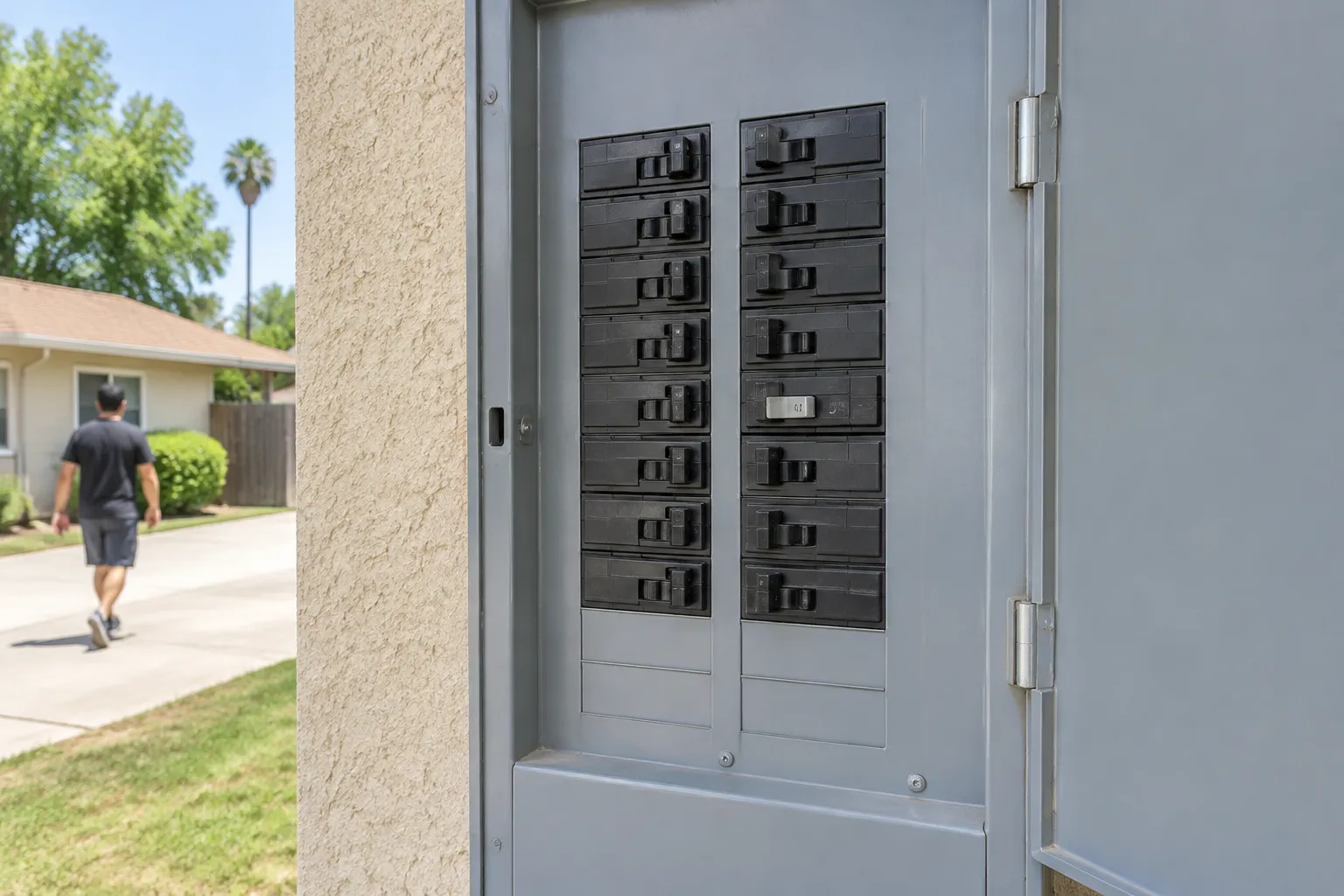
If you mean a switch on the panel for one circuit, the same logic applies at a smaller scale. A switch that trips only when the heater or oven is on is overloaded. A switch that trips with nothing running is faulty, or the wiring has a problem.
Keep your hands out of the panel. Lugs on the main stay live when the main is off. A local electrician can test the main and the branch circuits safely. A main that trips often over months can also mean the panel is too small for modern loads, which is when an electrical panel upgrade comes up.
My circuit breaker won't reset even though there's nothing plugged in. What could be the problem?
A breaker that will not reset with nothing plugged in has a fault in the wiring, a hard-wired fixture or fan, or the breaker itself. Push the handle fully to off before pushing to on, since a tripped handle often rests in the middle. If it still trips, stop and call an electrician.
Hard-wired loads stay connected when you unplug cords: ceiling fans, bath fans, garage door openers, smoke alarms, under-cabinet lights. Switch their wall switches off and try again. If it holds, one of them has a problem. If not, the breaker or the wall wiring is the cause. Wall wiring faults can be a nail through a cable, rodent damage or water in a junction box. An electrician can trace the circuit with testing tools.
Is it safe to flip a tripped breaker back on?
One reset is usually fine, once you have unplugged what you can and nothing smells burnt or looks scorched. Repeated resets are not safe, because a short or arc fault can put heat into the wiring each time. Stand to the side of the panel, flip the breaker, and stop if it trips again right away.
Never reset when you see smoke, hear popping, smell burning plastic or notice a hot panel cover. Leave the breaker off, stay clear and call 911 for smoke or fire. If a trip came right after water got near a panel, outlet or appliance, do not touch the panel with wet hands and have it checked by an electrician before turning it on. For a hot panel with no smoke, see the section on panel heat in the main guide.
Does an air conditioner trip a breaker differently?
Yes. Air conditioners have large motors and a compressor that draw a start surge, so a tired unit or dirty coil can trip a breaker that handles lighter loads fine. If a central or window AC trips the breaker, it often points to the AC itself rather than the house wiring. See the full article on an air conditioner that keeps tripping the breaker.
Questions people ask
What will cause a breaker to trip again after it is reset?
The cause is still there. That might be an overloaded circuit, a faulty appliance, moisture, damaged wiring or a worn breaker. If it trips after minutes or hours under load, suspect an overload or heat. If it trips instantly, suspect a short. Unplug everything and add items back one at a time to find which one does it.
What can I do if the main switch keeps tripping?
Turn off all branch breakers, reset the main, then switch branches on one at a time. If one branch trips the main, work on that circuit. If the main trips with every branch off, or will not reset, call an electrician. Do not remove the panel cover. The incoming lines stay live even when the main is off.
How many times can a breaker trip before it goes bad?
There is no set number. Breakers are designed to trip, and a breaker that trips from a real overload is working. Repeated trips under heavy load or fault can wear one, though. Signs of a bad breaker are a loose handle, heat, buzzing, or trips well under its rating. An electrician can test it rather than guess.
How much does it usually cost to replace a circuit breaker?
National price guides put a single breaker replacement at roughly $150 to $400 with parts and labor, with AFCI and GFCI types costing more. Your electrician's quote overrides any guide. The breaker repair cost page explains what moves the price.
Can an electrical fire start if the breaker is off?
A breaker that is off has cut power to the circuit it protects, so that circuit should not start a fire. The risk is that the main lugs and the wires feeding the panel stay live, and a failed breaker may not have opened. If you smell burning or see smoke, leave and call 911 whether or not the breaker is off.
Sources used
- Safe Electricity, Ground Fault Circuit Interrupters
- CSLB C-10 Electrical Contractor classification
- Published 2025 and 2026 US price guides for breaker replacement
Last changed