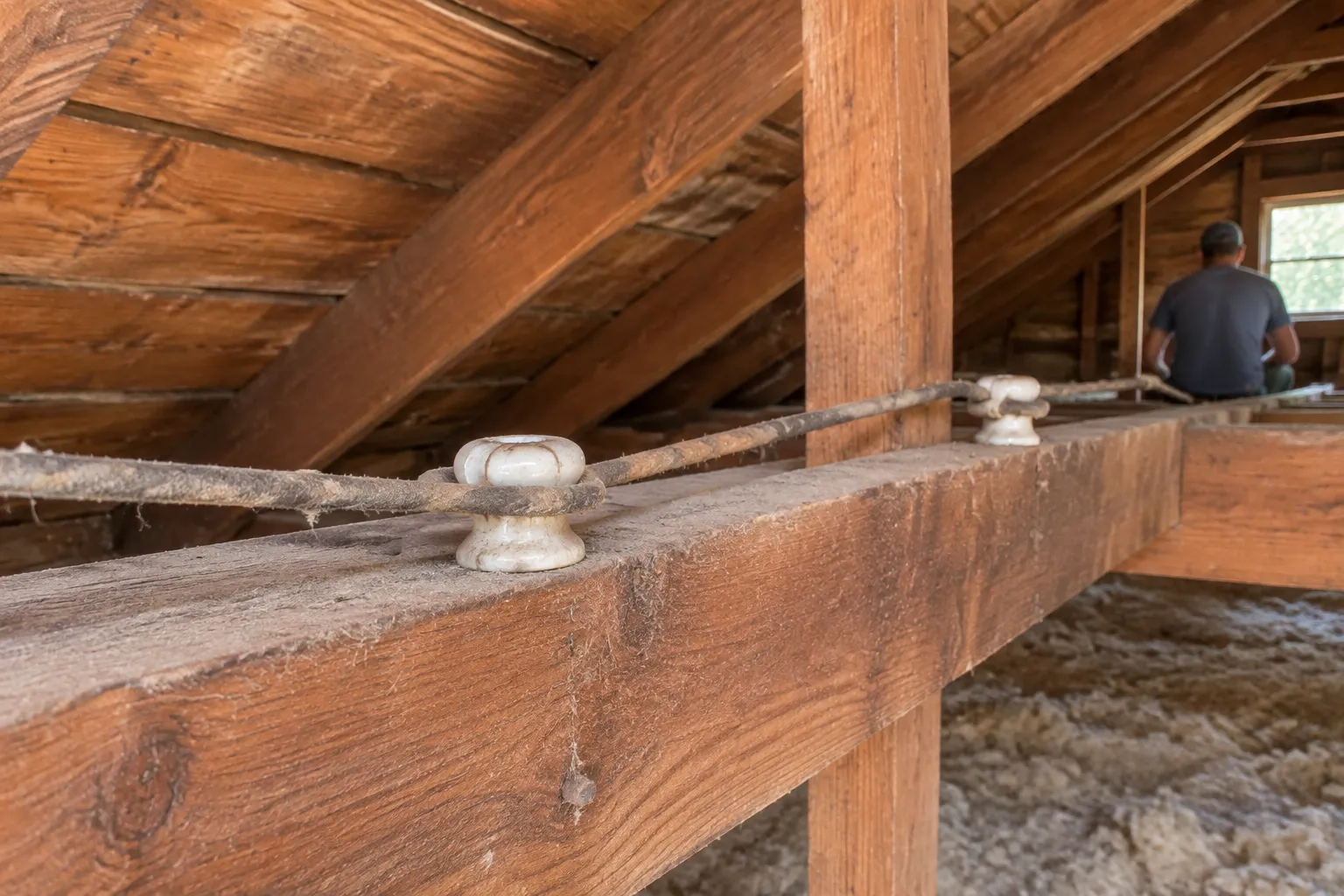
Replacing knob and tube wiring means installing new modern copper cable with a ground wire, connecting it to a panel that can handle it, and removing or disabling the old wires. A local electrician does the work under a permit, and the city or county inspects it. National price guides put a whole house at roughly $12,000 to $36,000. This page covers how the job runs, what changes the price and what to ask before you book. The overview is on the knob and tube wiring hub.
Does knob and tube wiring need to be replaced?
Not always, but often. Knob and tube that is in good condition, not extended and not covered by insulation can stay in service in many cases. Replacement is the usual advice when an electrician finds damaged insulation, overloaded circuits, amateur splices or buried wiring, or when you plan a remodel, an addition or heavy new loads.
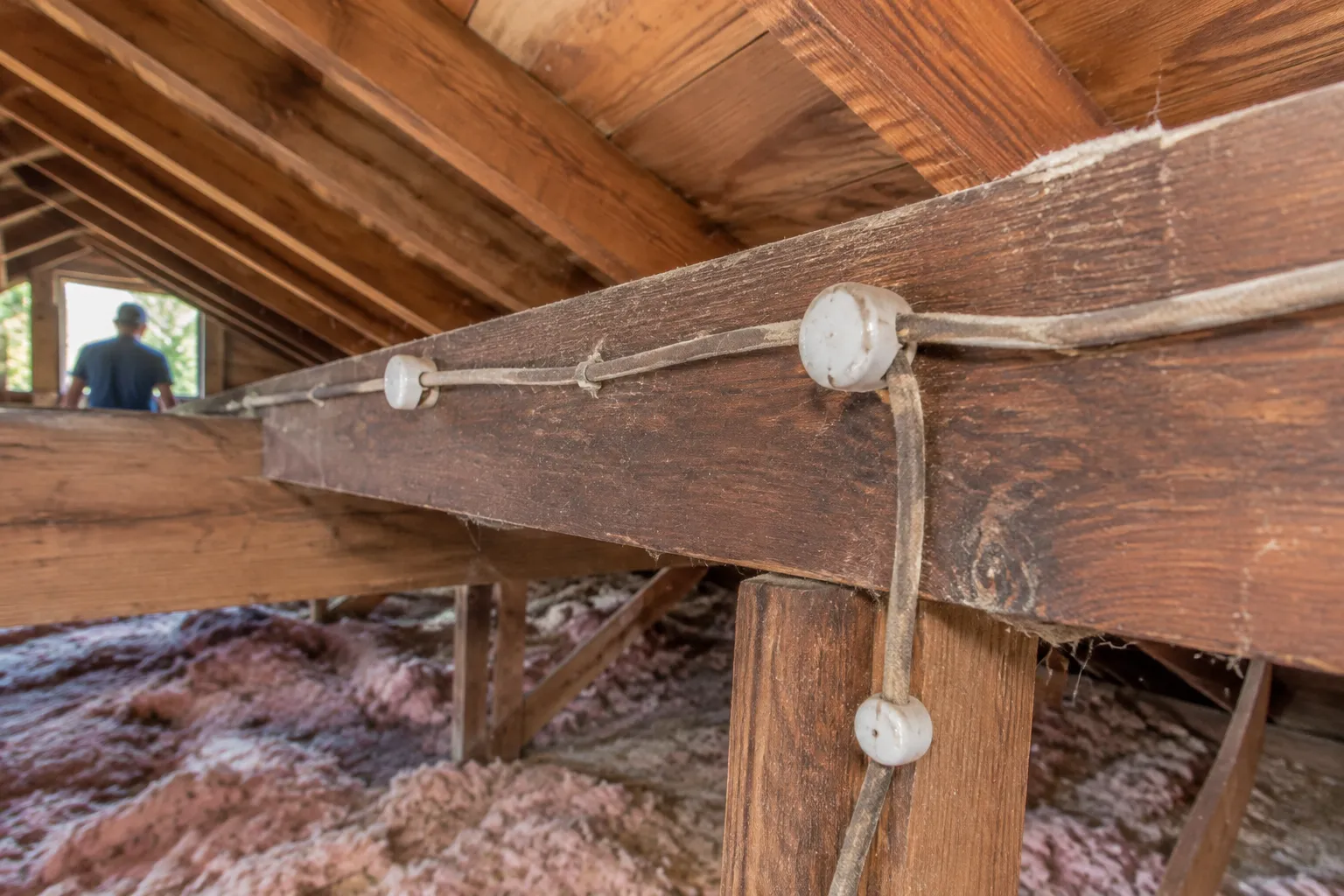
The system has no ground wire and was designed for lighter use than a modern home puts on it. Cloth and rubber insulation ages and cracks. These are the main risks with old wiring, which is why insurers and home inspectors often treat it as a flag. As widely reported, some insurers restrict coverage on houses with it, and some buyers ask for it to be replaced. That varies by company, so ask yours. If you are not sure what you have, read what is knob and tube wiring first.
What does wiring knob and tube replacing involve?
The job has five parts. An electrician inspects the whole house and maps the circuits. They quote and pull a permit. They run new cable through attics, crawl spaces and wall cavities. They connect it to a panel, add grounded outlets and any ground fault or arc fault protection the code calls for, then switch circuits over and remove the old wires. An inspector checks the work.
Most of the labor is access. In a one-story house with an attic and crawl space, much of the cable can be run without opening walls. Two-story houses, plaster walls and finished ceilings take more work. Electricians often make small access holes, fish cable through, and patch afterward. Some jobs need whole sections of wall opened. Ask whether patching and paint are in the quote, because they often are not.
Many electricians also replace or upgrade the panel at the same time, because an old panel rarely suits new circuits. If yours is original, see upgrading an electrical panel.
Can you rewire a house without removing walls?
Often partly, rarely completely. Electricians use attics, basements, crawl spaces, closets and small cut-outs to fish new cable. Firestops, insulation and plaster with wood lath make it harder, and some rooms may need wall or ceiling openings. A fair quote says in writing where walls will be opened and who repairs them.
Can you live in the house during the work?
Usually yes, with limits. The power is off for parts of each day, often a few hours at a time, and some rooms may be unusable for a day or two. Ask for a plan that keeps the fridge, heating and cooling running. If you have anyone at home who depends on electrical medical equipment, tell the electrician before you book so the plan covers it. A whole-house job can last from several days to a couple of weeks.
What is the California rule on who can do the work?
California law requires electrical work for others to be done by a contractor holding a C-10 electrical license from the Contractors State License Board. Work valued at $1,000 or more in labor and materials, or any work that needs a building permit, falls under that rule. You can check any license on the board's website. San Joaquin County states that a permit is required to install, alter, replace or repair electrical services and systems, and the City of Stockton has its own building permit process, so confirm with it before work starts. Any electrician who suggests skipping the permit is a reason to walk away.
What affects the price of wiring knob and tube replacing?
Whole-house replacement is commonly priced at about $8 to $20 per square foot, which gives a range of roughly $12,000 to $36,000 for a typical home in national price guides. The number moves with size, number of floors, wall type, access, the panel and permit fees. The electrician's written quote overrides any guide.
| What changes the price | Lower cost | Higher cost |
|---|---|---|
| Access | Open attic and crawl space | Finished walls, plaster, no crawl space |
| House size | Small, one story | Large, two stories or more |
| Panel | Existing panel is adequate | New panel or service upgrade needed |
| Repair work | Little patching | Plaster, drywall and paint after |
| Scope | Part of the house | Whole house, with new circuits added |
Plaster and lath repair is a common reason bids come in high. For fuller ranges, see rewire house cost. If you also have aluminum wiring or another older system, the guide to electrical wiring wire covers how to tell them apart.
Questions people ask
How long does wiring knob and tube replacing take?
A typical whole house takes from several days to a couple of weeks of electrical work, depending on size, access and the panel. Plaster repair and painting add time after the inspection. Part-house jobs, such as one floor or a kitchen, can take a day or two. The quote should give a start date and rough duration.
What should I ask before I hire someone for wiring knob and tube replacing?
Ask for a C-10 license number and check it on the Contractors State License Board site. Ask who pulls the permit, whether patching and paint are included, whether a panel upgrade is in the price, how long the power will be off, what happens if hidden problems appear and how the quote is paid. Get it all in writing from each of two or three electricians.
Do I need to be home for wiring knob and tube replacing?
Not for every hour, but someone should be there to give access at the start, to decide where walls can be opened and at the final walkthrough. Many owners leave during the day if the electrician has a key and a plan. Pets and people with medical equipment are the main reasons to arrange the schedule in advance.
Can I replace knob and tube wiring myself?
Whole-house rewiring is a poor DIY job. California homeowners can sometimes pull a permit for their own home as owner-builders, but the work still has to pass inspection, and mistakes inside walls cause fires. If you are thinking about it, talk to the building department first and be honest about your skill level.
Is aluminum wiring the same problem?
It is a different one. Aluminum branch-circuit wiring was used in many houses from about the 1960s to the mid-1970s. The Consumer Product Safety Commission has found that connections can loosen and overheat. Fixes include special connectors at every connection, or replacing the wiring. An electrician has to inspect it before advising.
How do I get quotes?
Send your details on the price request form and local electricians who handle rewiring can quote the work. This site does not do the work itself. You can also find a general approach in how to choose an electrician, and the site home page lists other jobs for an electrician near Stockton to quote.
Sources used
- Knob-and-tube wiring, Wikipedia
- CPSC Publication 516, Repairing Aluminum Wiring
- San Joaquin County, residential electrical permits
- California Department of General Services, Building Standards Commission, codes
- Published 2025 and 2026 national price guides for knob and tube replacement, checked November 2026
Last changed