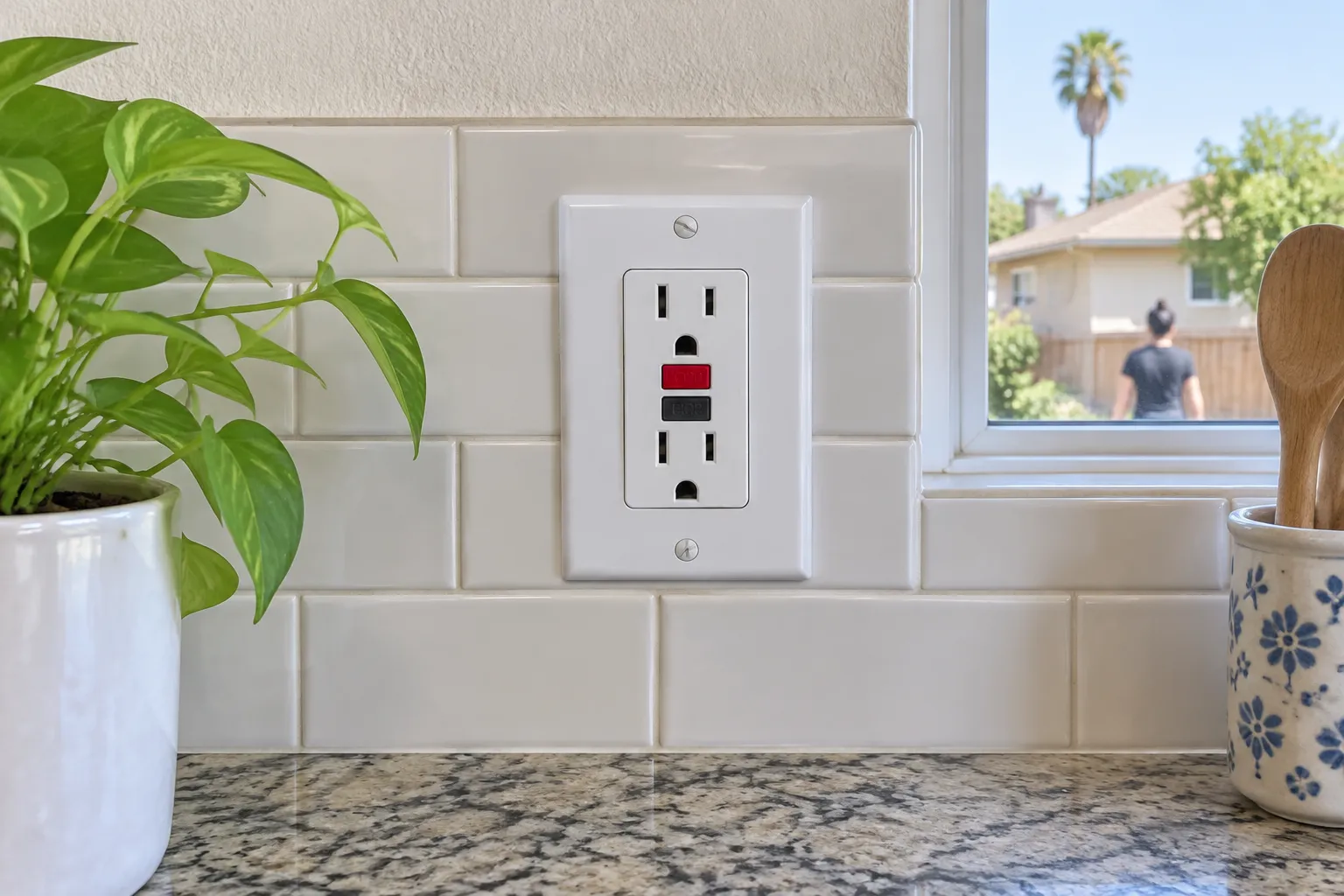
National price guides put a GFCI outlet installed by an electrician at roughly $100 to $300 per outlet. Replacing a standard outlet costs less, and a new outlet or a 240-volt outlet costs more. Labor and the service call make up most of the bill, since the device itself is a small share. This page is part of the outlets, switches and GFCI guide. The figures below are national guides and not a Stockton price list, so the quote you receive overrides them.
How much does an electrician usually charge to install a GFCI outlet?
An electrician usually charges between about $100 and $300 to install or replace with a GFCI outlet, according to national price guides, and some put a basic swap lower. Expect a service-call minimum, commonly $100 to $200, to apply even for a single outlet.
| Job | Typical range from national price guides |
|---|---|
| Replace an existing standard outlet | $80 to $350 |
| Install a new standard outlet | $140 to $320 |
| Install or replace with a GFCI outlet | $100 to $300 |
| 240-volt outlet and circuit (dryer, range, charger) | $250 to $800 |
| Service-call minimum | $100 to $200 |
| Electrician hourly rate | $50 to $130 |
Complex GFCI work can pass the top of the range. If you want several outlets done in one visit, the price per outlet usually falls, though one guide shows about $90 to $200 each for three to six outlets.
What makes a GFCI installation cost more or less?
The biggest drivers are whether the outlet already exists, how far the wire has to run, how easy the wall is to reach and whether a permit is needed. Swapping a device in an existing box is the cheapest job. Cutting into drywall, pulling new cable and adding a breaker cost the most.
- Swap or new? Replacing a receptacle in an existing box is the quickest job. A new location needs cable, a box and patching.
- Distance from the panel. A longer run takes more wire and more time.
- Wall and ceiling access. An open basement ceiling is easier than a finished plaster wall in an older home.
- Panel capacity. A full panel may need extra work before a new circuit fits.
- Outdoor or damp locations. Weatherproof boxes and in-use covers add to the cost.
- Old wiring. Ungrounded cable, cloth insulation or damaged wire can turn a swap into a repair.
- Permit and inspection fees. National price guides give figures from about $50 to $400 depending on the source and the city.
- Time of day. Evening, weekend and emergency calls often cost more.
Understanding these factors helps you compare quotes. Two quotes for "a GFCI outlet" can differ because one includes a new box and wall repair and the other does not.
How much does it cost to add an electrical outlet?
National price guides put a new standard outlet at about $140 to $320 and a GFCI at $100 to $300. The cost is mostly labor for running wire. If the new outlet can tap an existing nearby circuit, the price stays near the low end.
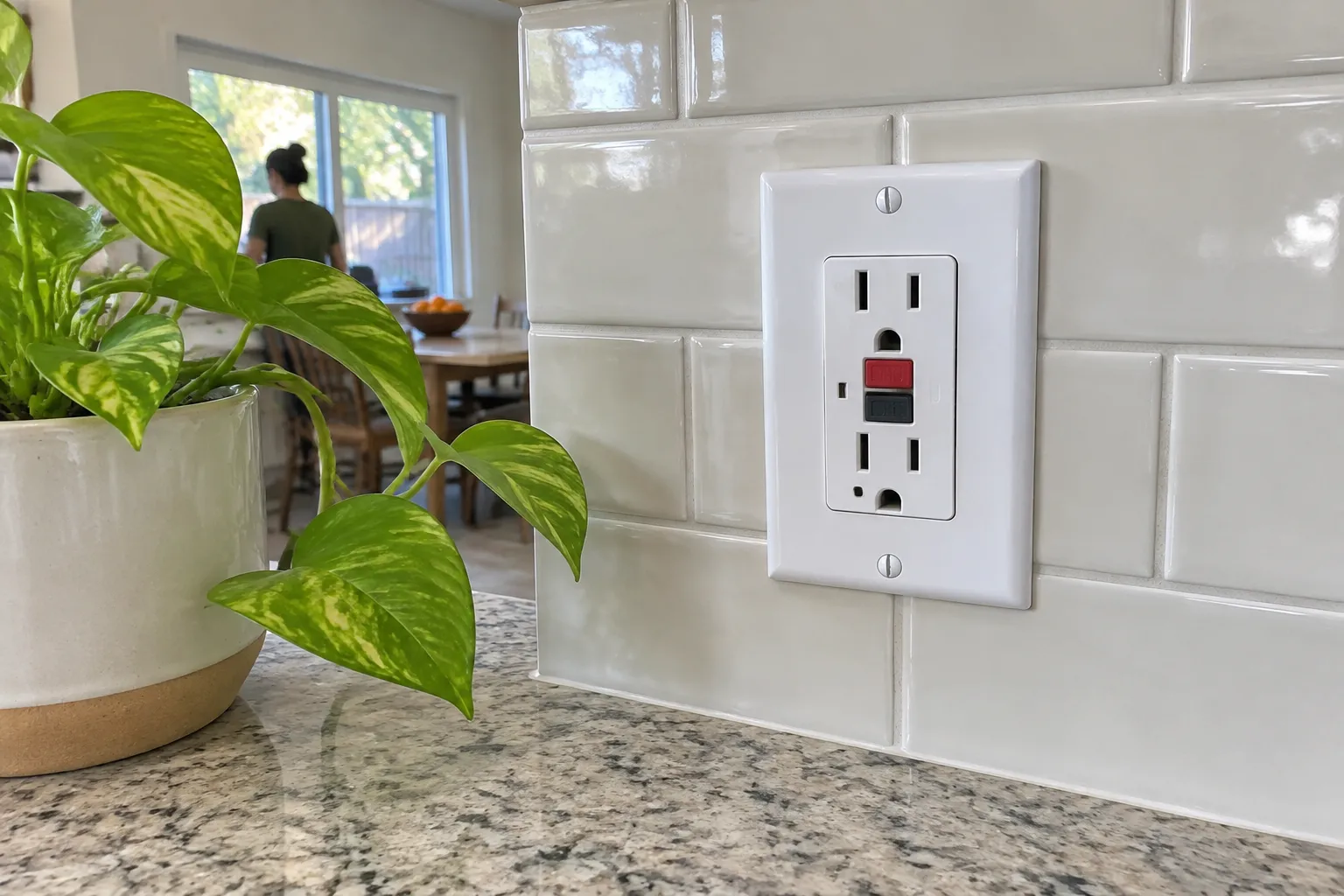
A new outlet needs a permit in many places. National price guides say new circuits and most new wiring usually need a permit and inspection in California, while a like-for-like swap often does not. Confirm with the City of Stockton permit center before work starts. Your electrician can tell you what applies and pull the permit for you.
If the new outlet will go outdoors, in a bathroom, a garage, a kitchen or a laundry area, plan on a GFCI. Where California code requires GFCI protection is a separate page.
How much does a 220 or 240-volt outlet cost?
National price guides give about $250 to $800 for a new 240-volt outlet and circuit from the panel. Long runs, heavier wire and a high-amp breaker push it higher, and an EV charger outlet on a longer run can cost more.
A 240-volt outlet differs from a standard one in four ways: heavier cable, a double-pole breaker sized for the load, a special receptacle matched to the appliance and, nearly always, a permit. These are not beginner jobs. For electric vehicle outlets, see EV charger installation cost, which covers charger hardware and panel limits.
Other outlet types that people search for have their own price patterns:
- Range, dryer and air-conditioner outlets. These sit in the 240-volt range above, depending on amperage.
- Coax, cable and phone outlets. These are low-voltage jobs. Prices vary by provider and by how far the cable has to run, so ask the provider.
- Kitchen island and floor outlets. These need extra work to run cable through cabinets or floors and often cost more than a wall outlet.
Is a GFCI outlet worth the cost?
Yes, wherever the code requires one, and often where it does not. A GFCI cuts power in a fraction of a second when current leaks through a person or a damp path to ground. Safe Electricity says it reacts in less than one-tenth of a second and trips on a difference as small as 4 or 5 milliamps.
The device is cheap. The labor is what you pay for. If you are already paying for a service call, adding another GFCI in the same visit costs less than a separate trip. If you have older bathroom, garage or outdoor outlets without GFCI protection, it is worth asking about them while an electrician is there. Understanding the difference between GFCI and AFCI helps you decide what else to ask for.
Who can do the work, and what does a quote include?
California law requires electrical work done for others to be performed by a contractor holding a C-10 electrical license from the Contractors State License Board. Ask for the license number and check it on the board's website before you accept a quote. Owners may do work on their own property under an owner-builder exemption, within limits.
A clear quote lists what is included. Ask:
- Is the device, box and cover plate included?
- Is there a minimum service charge, and is it deducted from the job?
- Does it include a permit and inspection, if one is needed?
- Does it include patching the wall?
- What happens if the electrician finds old or damaged wiring?
- How long will the work take?
Comparing two or three quotes for the same described job makes gaps obvious. How to choose an electrician lists more questions, and the wider cost of an electrician in Stockton covers hourly rates. To request quotes from local electricians, use the price request form or look for an electrician in Stockton through it. If your outlet will not reset or has stopped working, try the checks on the outlet not working page first, since a tripped breaker costs nothing to fix. Use the GFCI installation guide if you want to understand the job before you book.
Questions people ask
How long does a GFCI outlet installation take?
Replacing an outlet with a GFCI usually takes under an hour once the electrician has access. Adding a new outlet takes one to several hours, depending on the wall and the wire run. A new 240-volt circuit can take half a day. The electrician can give a firm estimate after looking at the panel and the location.
What should I ask before I hire someone to install a GFCI outlet?
Ask for their C-10 license number and check it with the state. Ask what the quote includes, whether a permit is needed, what the minimum charge is and what happens if they find older wiring. A written quote showing each item makes later disagreements less likely.
Do I need to be home for a GFCI outlet installation?
Usually, yes, at least at the start and the end. The electrician needs to reach the panel and the outlet, and you will want to see the device tested before they leave. For outdoor outlets and garages you may need less of your time. Agree it when you book.
Can I install a GFCI outlet myself to save money?
California lets owners do work on their own property within limits, and a like-for-like swap is within reach for many people if the power is off and tested dead. The code and permit rules still apply. If the wiring is old, damaged or unclear, stop and pay for an electrician instead.
Does a GFCI outlet protect the other outlets on the circuit?
It can, if it is wired to feed them through its load terminals. Outlets connected that way trip with it. A GFCI that protects only itself covers one outlet. The wiring is the difference, which is why an electrician checks how the circuit runs before choosing where to install it.
Sources used
- Published 2026 national GFCI outlet cost article
- Published 2026 national outlet replacement cost article
- Published 2026 national 240-volt outlet cost article
- Published 2026 national electrician rate guide
- Safe Electricity: Ground Fault Circuit Interrupters
- Contractors State License Board: Building Official Information Guide
Last changed