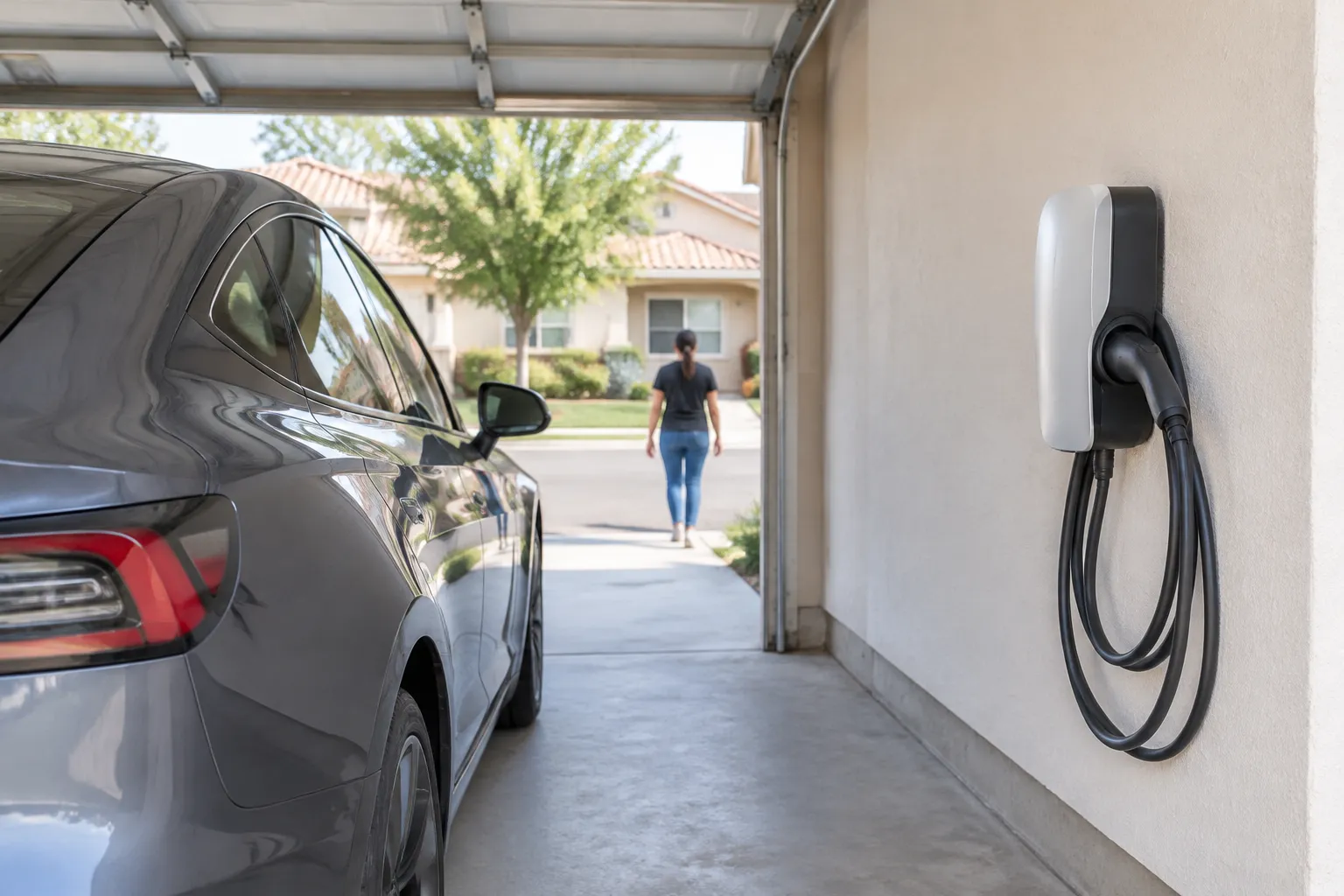
A simple Level 2 EV charger installation in a house with spare panel capacity costs about $800 to $3,000 for the electrical work, based on national price guides. The charger itself adds roughly $100 to $800. A panel or service upgrade can add $1,500 to $4,000 or more. These are national figures, not Stockton quotes, and your electrician's written quote overrides them. This page breaks down the pieces, using a home EV charger installation as the baseline.
How much does it cost to install a new EV charger?
For a typical job, plan on $800 to $3,000 for the electrician, the wire and the breaker, plus $100 to $800 for the charger. The low end is a short run from a panel with spare room. The high end is a long run or extra panel work.
Here is how the pieces usually break down in national price guides.
| Item | Typical range |
|---|---|
| Charger (Level 2, common home models) | $100 to $800 |
| Simple installation total (not counting charger) | $800 to $3,000 |
| Adding a new circuit | $60 to $150 |
| Subpanel | $500 to $1,500 |
| Panel or service upgrade | $1,500 to $4,000 or more |
Treat the table as a guide. Permit fees are set locally, so ask what applies. Ask for an itemized quote, and compare it to this table line by line.
What is the cheapest way to get a home EV charger?
The cheapest route is a short circuit run from a panel with spare capacity, a plug-in charger on a new 240V outlet, and quotes from two or three electricians. Charging from a standard 120-volt outlet needs no new equipment if the circuit is suitable, but it adds range slowly.
A 240V outlet install is often cheaper than hardwiring. It can cost less, though the saving depends on the run. It still needs a permit. Skipping the permit saves money in the short term and costs more later if an inspector, an insurer or a home buyer asks about the circuit. Utility rebates can also cut the cost, covered below. For the legal side of hiring, read who can install an EV charger before you accept a cheaper offer from someone without a contractor license.
Is a 240V outlet cheaper than a hardwired charger?
Usually yes, by a few hundred dollars. A hardwired charger connects straight to the circuit, which suits higher power and outdoor mounting. A plug-in unit uses a 240V outlet and costs less to wire. Both need a dedicated circuit and normally a permit. The right choice depends on the charger you buy and where it goes.
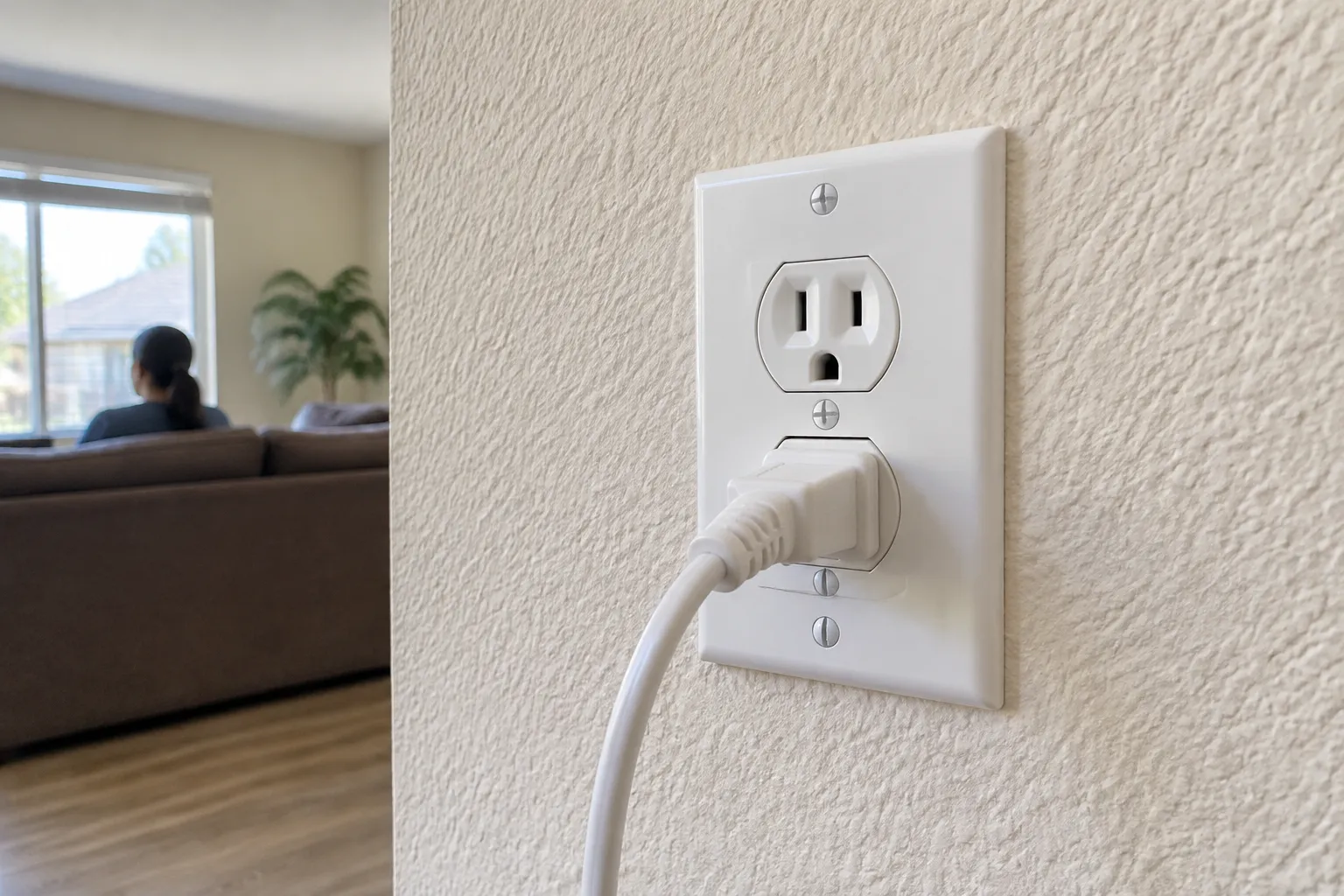
One factor flips the saving. A hardwired charger can be rated higher than a plug-in unit, so you get faster charging for the same effort of running a circuit. If you may move house, a plug-in charger can go with you. If you want the fastest option the circuit can handle, hardwire it. Ask the electrician to quote both, with the same charger, so you see the difference in your own home.
What wire do I need for a level 2 EV charger?
The wire is sized from the breaker. A 50-amp circuit, which suits a 40-amp charger, commonly uses 6-gauge copper wire. A 60-amp circuit for a 48-amp charger uses heavier wire. The code treats EV charging as a continuous load, so the circuit is generally sized at 125 percent of the charger rating.
Wire is a cost driver for a simple reason: length. A 25-foot run is cheap. A 100-foot run across the house, or through conduit to a detached garage, adds real money, and trenching for a detached garage is extra.
What pushes the price up or down?
The panel decides most of it. If the panel has room and capacity, the job is simple. If it is full, old or near its limit, you may need a subpanel, a load management device or a panel upgrade. After that comes distance from the panel to the charger, the type of wall, and local permit fees.
Check these five factors.
- Panel capacity. A load calculation shows whether the charger fits. A 100-amp service is more likely to need work than a 200-amp one. Our guide to upgrading an electrical panel and panel replacement costs cover that case.
- Run length and route. Short and open is cheap. Long, finished walls or trenching raise the cost.
- Charger power. Higher amperage means heavier wire and a bigger breaker.
- Permit and inspection. Fees are set by the city or county building department.
- Extras. Surge protection, a dedicated meter, an outdoor-rated enclosure, or a load-sharing device add to the quote.
Bundling a panel upgrade with the charger circuit can save money compared with doing them as separate jobs, according to one 2026 guide. Ask the electrician whether combining the work makes sense for your home.
Do I need to upgrade my panel to charge an EV at home?
Not always. Many homes with a 200-amp service can add a Level 2 charger with no panel work. Older homes with 100-amp service, full panels, or electric heat and cooking more often need help. The electrician's load calculation answers it. Options include a smaller charger setting, a load management device or an upgrade.
The U.S. Department of Energy says some homes may not have enough capacity for Level 2, and that a qualified electrician can determine this and add circuits. The panel is the biggest swing in the budget, so ask for the calculation in writing. If the electrician proposes a full upgrade, ask whether a load management device would meet your charging needs for less. Read our page on residential electrical panel upgrades before you decide.
How much does it cost to charge an EV at home with PG&E?
PG&E offers a time-of-use rate called Home Charging EV2-A that covers your car and your home together. Off-peak energy is lowest from midnight to 3 p.m., and peak is 4 to 9 p.m. PG&E's page shows summer off-peak at about 23 cents per kWh and peak at about 54 cents, so the hour you charge matters.
PG&E lists some limits: customers with usage above 800 percent of the baseline allowance over the past 12 months are not eligible. PG&E also offers an EV-B plan that separates the car's use from the home with a second meter, which adds installation cost. Check the current rates on the PG&E website before you plan around them, because prices change. The Department of Energy gives a national example of about $6 to fully charge a 54 kWh battery at 10.7 cents per kWh, but California rates are higher.
Are there rebates or tax credits for a home EV charger?
Possibly. PG&E has run a Residential Charging Solutions pilot that refunds 50 or 100 percent of the cost of approved Level 2 equipment, with the higher share for income-qualified households, on a first come, first served basis. Dollar caps differ between sources, so check pge.com for the current terms. The federal home charger credit was reported to end for equipment placed in service after June 30, 2026.
Confirm each program with the program administrator, not a charger seller. Rebates often require approved equipment, a permit or an installer who holds the right contractor license, so ask the electrician before you buy a charger. Keep the permit, the receipt and the inspection record in case a program asks for proof.
Questions people ask
How long does EV charger installation take?
A simple job near the panel is often a few hours to one day. The permit and inspection add time, and booking an inspector can take longer than the work. Panel upgrades and long runs take longer. Ask for a schedule that includes the inspection date.
What should I ask before I hire someone for EV charger installation?
Ask for their California contractor license number and check it with CSLB. Ask who pulls the permit, what the load calculation shows, the circuit size and wire route, and the full written price with exclusions. Ask what happens to the price if the panel needs work.
Do I need to be home for the installation?
Someone usually needs to be there at the start and at the end, to show the location, give access and approve the placement. Power to part of the house is turned off briefly. Ask how long the outage will last.
How much is a Level 1 charger installation?
A Level 1 charger plugs into a standard 120-volt outlet, so there is often no installation cost if the outlet is on a suitable circuit. The U.S. Department of Energy says Level 1 needs no added equipment if a suitable outlet is available. Charging is slow, so many owners add Level 2.
What does a Level 3 or DC fast charger cost?
DC fast chargers are for commercial sites, not homes. They typically need much higher power than a house supplies, and the cost generally runs far above a Level 2 job. This page does not cover them, and I did not find a reliable home-use price. For a home, the realistic choices are Level 1 and Level 2.
Do prices differ between a charger from a car maker and one from a store?
The hardware price differs, but the installation work is much the same. The electrician needs the charger's installation manual to size the circuit. Buy the charger before the quote visit, or ask the electrician which models they suggest, so the quote matches the unit.
For more on local electricians, see electrical help in Stockton or compare general electrician costs.
Sources used
- U.S. Department of Energy, Alternative Fuels Data Center, Charging at home
- PG&E, Electric vehicle rate plans
- California DriveClean, PG&E special EV rate for home charging
- CSLB, Hire a Contractor
- Published 2026 national EV charger installation cost guide
- Published 2026 national EV charger installation cost article
Last changed