If your Stockton house has old wiring, the question is what condition it is in and what your plans are. Knob and tube wiring was installed from roughly the 1880s to the 1940s. It can still carry power, but it has no ground wire, its insulation ages, and it was never designed for modern loads or for insulation packed around it. Most owners decide to replace it before selling, insuring or remodeling. A local electrician has to inspect the wiring and quote the job. This page maps the topic and links to the detail.
What counts as older home wiring in Stockton?
Older home wiring means any system installed before modern copper cable with a ground wire became standard. Three types matter most. Knob and tube wiring, from about the 1880s to the 1940s. Early cloth-covered cable. Aluminum branch-circuit wiring, used mainly from the 1960s to the mid-1970s. Each has different risks and different fixes.
Stockton is a mixed city. The Census Bureau's American Community Survey (2024 one-year estimate, via Census Reporter) puts the median build year for Stockton homes at about 1981. That means plenty of houses are newer than any of these systems. It also means the older neighborhoods near downtown, and pockets of homes from before World War II, are likelier places to meet the oldest wiring. Never assume a house has any of these systems because of its age or address. Only an inspection by an electrician can tell you, and a past remodel may have replaced part of a house and left part untouched.
Stockton also sits in San Joaquin County, with its own mix of rural homes, farmhouses and additions built decades apart. A single house can have three eras of wiring. A 1925 bungalow with a 1978 kitchen addition is common. The point of an inspection is to map which circuits are which.
What is knob and tube wiring, and how do you recognize it?
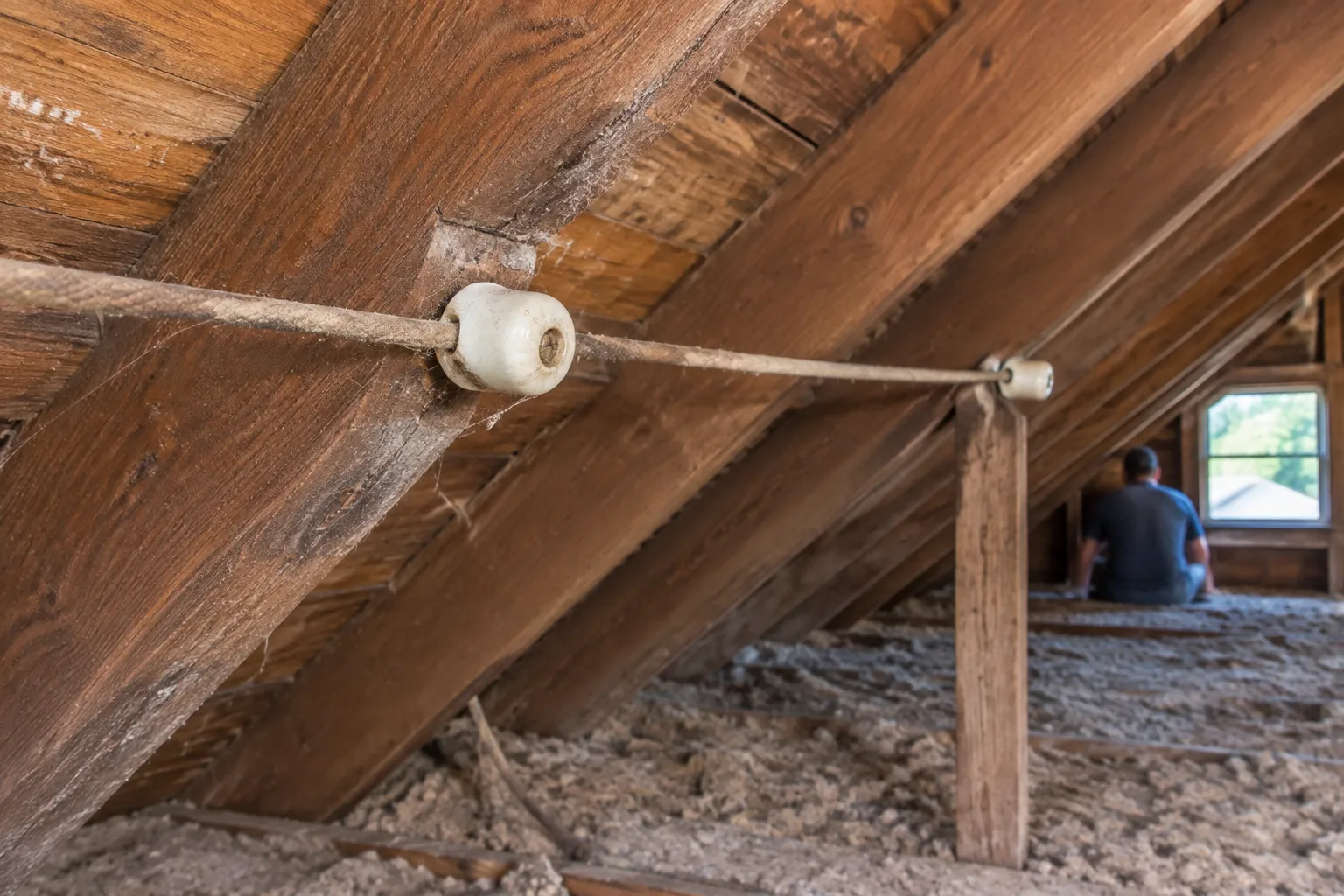
Knob and tube is an open wiring system. Single copper wires run through the attic, the crawl space and wall cavities. Porcelain knobs hold the wires along framing, and porcelain tubes protect them where they pass through studs and joists. There is no ground wire, and the hot and neutral conductors run separately rather than in one cable. The guide to what is knob and tube wiring explains the system in full.
You may be able to see it in an unfinished attic or basement as separate cloth-covered wires running past white or brown porcelain knobs. Behind finished walls you cannot see it. Two-prong outlets everywhere are a hint, but not proof, because a house can have two-prong outlets on newer ungrounded cable, and a house with three-prong outlets can still have knob and tube on some circuits. Treat any identification from photos, or from a real estate listing, as a reason to ask an electrician to look, not as a diagnosis.
Do not touch or cut any wire you suspect is old. Old insulation can crumble, and a wire that looks dead may still be live.
Is knob and tube wiring dangerous, and what are the risks?
Knob and tube is not automatically dangerous, but it carries real risks that grow with age and with changes to the house. The main ones are brittle insulation, spliced and extended wiring that was never done properly, overloaded circuits, and insulation placed over the wires. Any of these can cause overheating, and overheating is how wiring starts fires.
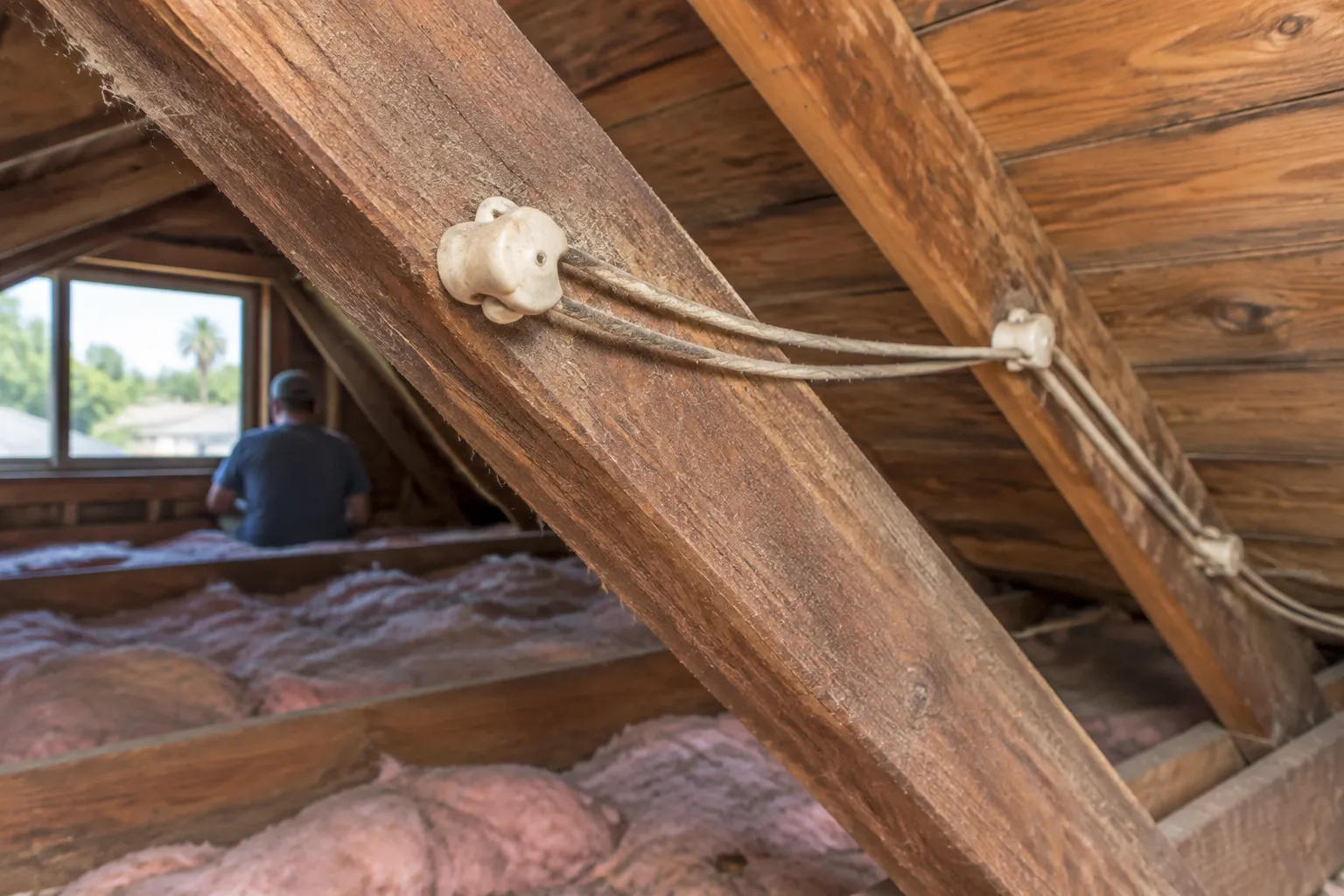
The open design was meant to let wires shed heat into the air. Blown or batt insulation packed over them traps heat. The National Electrical Code generally prohibits insulation over knob and tube wiring, although California is among the places that allow it in certain cases after an electrician inspects the wiring. Check that with your electrician and the local building department before anyone adds insulation in a house with this wiring. The older cloth and rubber insulation also dries and cracks. Safe use is generally limited to about 10 amps per circuit, which a modern household can exceed with a few appliances.
The missing ground matters too. Without it, surge protectors, three-prong plugs and ground fault protection do not work the way they were designed to. If you smell burning, see scorch marks or sparks, or the wiring is hot, treat it as an emergency. Call 911 if there is fire or smoke. For a downed line or a utility problem, contact PG&E.
Can you keep knob and tube wiring, and when should you replace it?
In many places, existing knob and tube can stay in service if it is in good condition and has not been extended, overloaded or buried in insulation. Replacing it is usually a decision based on condition, insurance, a sale, a remodel or a plan to add loads such as an EV charger. If an electrician finds damaged or altered wiring, the safest answer is to replace it.
Three triggers push most owners to rewire. First, an inspection. A home inspector or an electrician finds knob and tube, and recommends replacement. Second, insurance. As widely reported, some insurers decline or restrict coverage for homes with knob and tube, or ask for an electrician's report. Policies differ by insurer, so ask yours directly and do not rely on a general statement. Third, a project. Adding a kitchen, finishing an attic or adding a high-draw load often requires work on the circuits, and it is hard to add to a circuit that has no ground. Lenders and buyers can also raise the issue at sale time, as is commonly reported. Whether a given buyer or lender cares varies.
If you are weighing it, wiring knob and tube replacing explains how the work goes, and the sections below cover cost and the wire itself.
What does rewiring a house cost?
Published 2025 and 2026 national price guides put a whole-house knob and tube replacement at roughly $12,000 to $36,000 for a typical home, or about $8 to $20 per square foot. A general rewire without the extra access work often lands lower. Stockton quotes will differ, and the electrician's own written quote is the number that counts.
The price depends on square feet, how many floors, whether walls and ceilings can be reached from attic and crawl space or must be opened, plaster or drywall repair, a panel upgrade, and permit fees. The rewire house cost page breaks the ranges down. For a quote on your house, use the price request form.
Do you need a permit and a contractor for rewiring in Stockton?
Yes in nearly every case. Rewiring an occupied house is not a casual job. California's Contractors State License Board says a contractor license is required for work worth $1,000 or more in labor and materials, or whenever a building permit is needed. Electrical work for others must be done by a contractor holding a C-10 electrical license from the Contractors State License Board. You can check any contractor's license on the board's website before you agree to anything.
San Joaquin County's building department states that a permit is required to install, alter, replace or repair electrical services and systems. The City of Stockton runs its own building permits, with its own forms and fees. Call or check the city's building division before work starts, because requirements can change. Wiring work is normally inspected at rough-in and at final. The inspector checks the work against the California Electrical Code, which is the National Electrical Code with California amendments. The 2025 edition took effect on January 1, 2026.
Homeowners in California can sometimes pull a permit for their own house as an owner-builder, but whole-house rewiring is a poor DIY job. Ask the building department what it requires, and do not hire anyone who suggests skipping the permit.
What other old wiring problems show up in Stockton houses?
Aluminum branch-circuit wiring is the next most common concern. It was used in many homes from about the 1960s to the mid-1970s. The Consumer Product Safety Commission has warned that older solid aluminum wiring can loosen and overheat at connections. Replacing it all with copper is expensive, so electricians often use approved connectors at each connection point instead. Read electrical wiring wire for the types of residential wire, gauges, amp ratings and how to tell aluminum from copper.
Other signs of aging wiring include outlets that feel warm, flickering lights, breakers that trip often and a buzzing sound from a panel. If those are your symptoms, read why a breaker keeps tripping and flickering lights. An old or undersized panel often goes hand in hand with old wiring, so see upgrade electrical panel if yours is full or original.
Add-on loads are the other pressure point. Hot tubs, EV chargers and ADUs all need dedicated circuits. A hot tub, for example, often needs a 240 volt circuit that old wiring cannot supply, so see hot tub electrician for what that involves.
How do you get started with a rewire quote?
Start with what you know. Write down the age of the house, the rooms with two-prong outlets, any past electrical work, any insulation work, and any problems. Photograph the panel and any exposed wiring in the attic or crawl space from a safe distance. Then ask local electricians for written quotes that name the scope, the permit, the wall and ceiling repair and the panel.
Compare at least two or three quotes line by line. Ask each electrician for their C-10 license number and check it. Ask who pulls the permit, who patches the walls, how long the house will be without power, and what happens if they find something unexpected.
If you would rather not call around, send your details through the price request form and local electricians who handle rewiring can get back to you. How it works explains the steps. This site does not do the work. You can also read the general advice on how to choose an electrician. Whatever you choose, a Stockton-area electrician has to inspect the actual wiring first, because only they can say what your house needs.
Questions people ask
Does knob and tube wiring have to be replaced?
Not always. Existing knob and tube in good condition, not extended and not covered in insulation, can often stay in service. Replacement becomes the better choice when an electrician finds damage, overloaded circuits or later splices, when you want to remodel or add loads, or when your insurer or a buyer insists. An electrician's written inspection is the way to know.
Will insurance cover a house with knob and tube wiring?
It depends on the insurer. Some are widely reported to refuse new policies, charge more or require a written report from an electrician. Others do not care. Call your insurance company or agent and ask in writing what they require. Do not rely on a general statement from any website, including this one.
Can a house be rewired without removing drywall?
Often much of it can be done through attics, crawl spaces and small access holes, with patching afterward. Electricians fish new cable through walls where they can. Plaster and lath, firestops, and finished ceilings make it harder. Expect some patch and paint work, and ask each quote whether it includes it.
Can you live in a house while it is being rewired?
Usually yes for a partial or room-by-room rewire, with the power off for parts of each day. A whole-house job can make some rooms unusable for days. Ask the electrician for a plan that keeps the fridge, heating and cooling and a few outlets running, and plan around the days when the power is fully off.
How long does a rewire take?
A typical whole-house rewire takes from several days to a couple of weeks, depending on size, access and the panel. Plaster repair and painting add time after the electrical work. The electrician should give you a start date, a rough duration and the inspection steps in the quote.
What if I think my wiring is unsafe right now?
If you see smoke, flames, or smell burning plastic, leave the house and call 911. For an outage or a downed line, contact PG&E. For a hot outlet or scorch marks with no flames, switch off the circuit at the panel if it is safe to do so, stop using it and ask a local electrician to look at it soon.
Read on
- Wire types and gauges
Electrical wiring wire explained: cable types, gauges and amp ratings, copper vs aluminum, Romex vs knob and tube, and when a Stockton…
- Knob and tube replacement
Replacing knob and tube wiring in a Stockton home: how the work goes, what it costs, how long it takes and what to ask local electricians…
- Whole-house rewire cost
How much does it cost to rewire a house? Published price ranges for 2025 and 2026, what moves the price in a Stockton home and how to…
- Smoke detector wiring
How hardwired, interconnected smoke alarms are wired: the three wires, battery backup, replacing an old alarm, common faults and when to…
- What is knob and tube
What is knob and tube wiring? How it works, how to recognize it, why it is a risk, whether it is legal in California and what to do if…
Sources used
- Knob-and-tube wiring, Wikipedia
- Aluminium building wiring, Wikipedia
- CPSC Publication 516, Repairing Aluminum Wiring
- San Joaquin County, residential electrical permits
- California Department of General Services, Building Standards Commission, codes
- Census Reporter, Stockton city, American Community Survey 2024 1-year
- Published 2025 and 2026 national price guides for whole-house rewiring, checked November 2026
Last changed