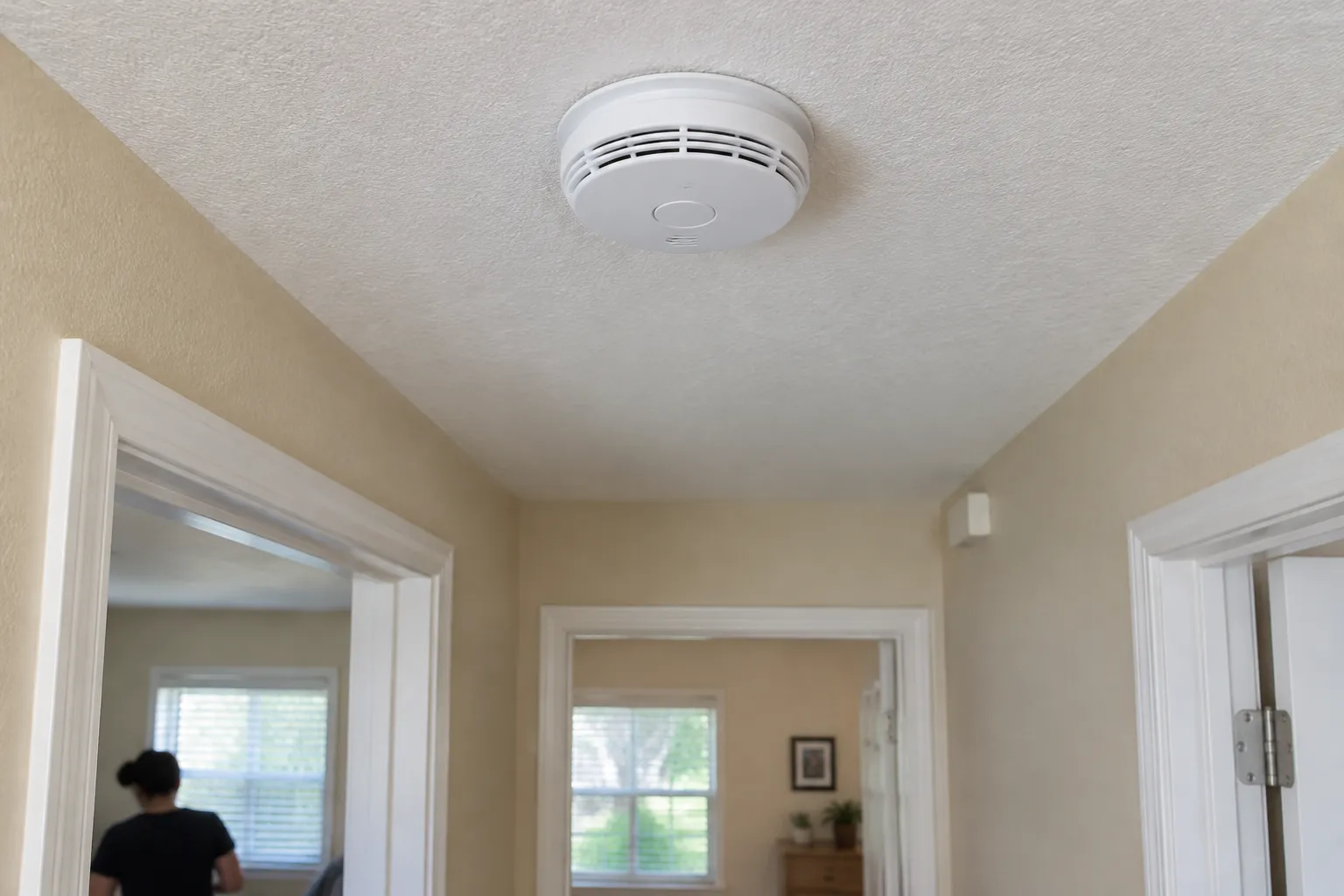
You need a smoke detector electrician when your alarms are hardwired into the house wiring, when you want to add or move hardwired alarms, or when a permit on your house requires them. Replacing a battery-only alarm is a job most homeowners do themselves. California requires working smoke alarms in homes and carbon monoxide alarms in homes with fuel-burning appliances, fireplaces or an attached garage. This page explains the rules, who may do the work and what to expect, and how it connects to residential electrical inspections.
What does California require for smoke alarms in a house?
California requires smoke alarms in every dwelling intended for people to live in, installed to the manufacturer's instructions and approved and listed by the State Fire Marshal. Existing alarms that work do not have to be replaced, and battery-operated alarms are allowed in existing homes unless a local rule says otherwise.
The law is in Health and Safety Code section 13113.7. The statute says alarms must be located in line with current building standards, and fire safety guidance puts them inside and outside each sleeping area and on every level of the home. Newer homes typically have alarms wired to the building power with a battery backup, and interconnected so that when one sounds they all sound. Existing homes may keep battery-only alarms, though many owners prefer interconnected ones.
Smoke alarms that run only on a battery must use a nonreplaceable, nonremovable battery that lasts at least 10 years, under Health and Safety Code section 13114. Wired alarms with a backup battery do not appear to fall under that rule, but they still wear out. The U.S. Fire Administration says to replace smoke alarms every 10 years.
What does California require for carbon monoxide alarms?
California requires a carbon monoxide device in an existing home that has a fuel-burning heater or appliance, a fireplace or an attached garage. Single-family homes had to comply by July 1, 2011. The device must be approved and listed by the State Fire Marshal.
Health and Safety Code section 17926 says the number and location follow new-construction standards where feasible, or the manufacturer's instructions. The statute does not say whether the device must be hardwired, plug-in or battery. Combination smoke and CO units are common. The maximum fine for not complying is $200 per offense, and owners get a 30-day notice to correct first.
When does a building permit trigger alarm requirements?
When your city or county issues a permit for alterations, repairs or additions over $1,000, the permit issuer may not sign off the finished work until you show that required smoke alarms are in place and listed by the State Fire Marshal. Ask your building department whether it also checks CO devices. Cities and counties often ask for a signed statement.
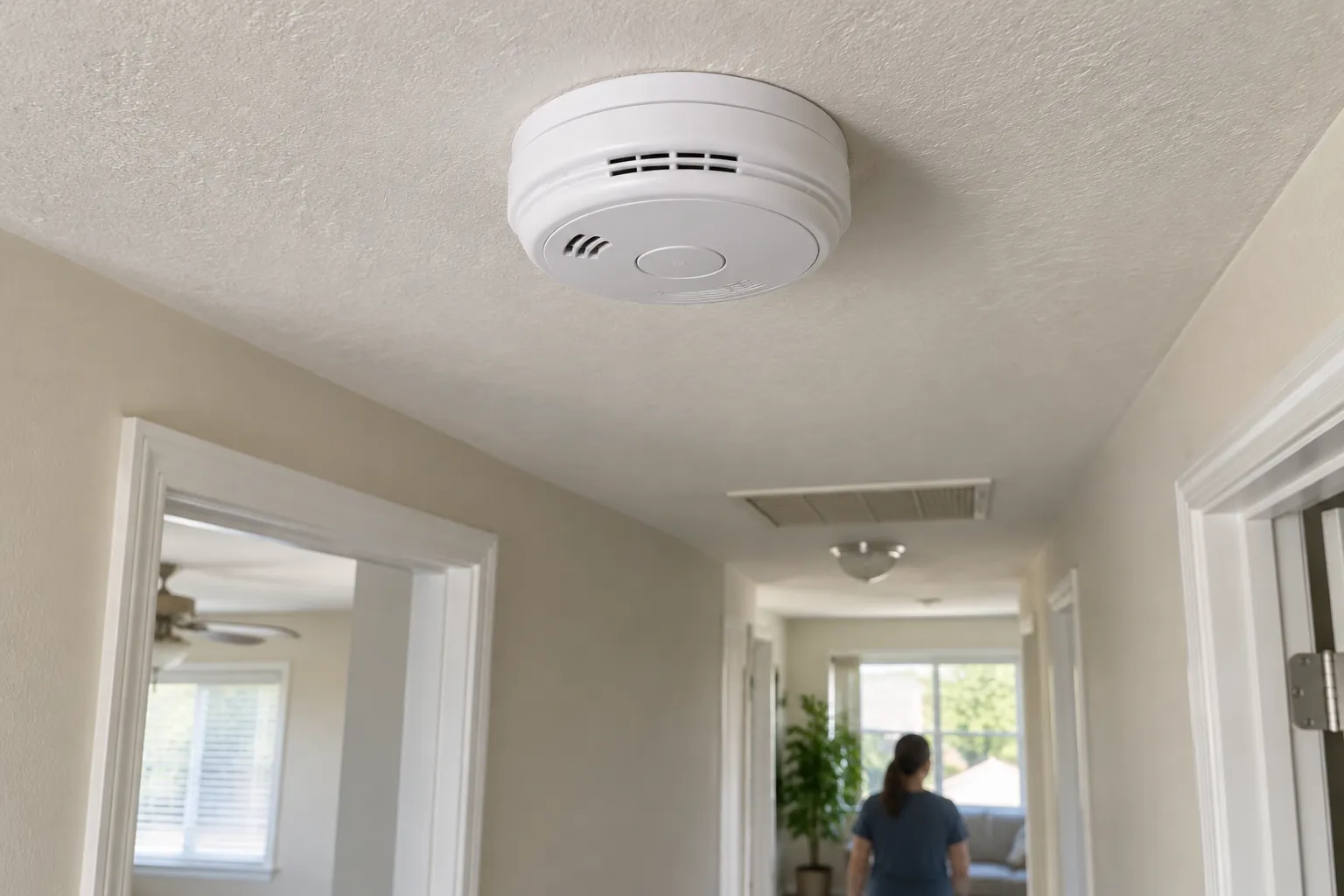
That means a re-roof, window replacement, remodel or an electrical panel upgrade can lead to an inspector checking your alarms at final. The rule applies to the dwelling, so expect the inspector to look beyond the room you worked in. If the walls are open, hardwiring and interconnecting new alarms is far easier. Whether you can use battery-only alarms in an existing home during permitted work depends on the current residential code and the local building department, so ask the department that issues your permit.
This is also why alarms appear in the final what an inspection costs conversation. The inspector is checking safety and code compliance together.
Do you need an electrician to install or replace a smoke detector?
For a battery-only alarm, no. A homeowner can mount it. For hardwired alarms connected to the house wiring, the answer depends on who does the work. If you are working on your own home, owner-builder rules may apply, and any work that needs a permit is outside the small-job exemption. If you hire someone to do wiring for you, California requires a contractor who holds a C-10 electrical license from the Contractors State License Board.
The small-job exemption, $1,000 for labor and materials since January 1, 2025, only covers work that does not need a permit and does not use employees. Hardwiring new alarm circuits, running new cable or changing the electrical panel are on the wrong side of that line in practice, so plan to hire an electrician. Replacing a hardwired alarm with the same type of unit on the same plug-in harness is the simplest case, and the how hardwired alarms work guide walks through it.
Hire an electrician when:
- The old alarms are hardwired and you do not know how they are connected.
- You want interconnected alarms in a house that has none.
- The ceiling box is damaged, the wiring is old or the alarm shares a circuit you cannot identify.
- A permit, a sale or an insurer calls for working alarms in every room.
- The alarms chirp, false-alarm or fail the test button and replacing them did not fix it.
What does a smoke detector electrician actually do?
An electrician replaces or adds hardwired alarms, checks the circuit and connections, makes sure the interconnect wire links all alarms, tests each unit, and notes the manufacture dates. They also look at related components such as the box, the circuit protection and whether the circuit is on an arc-fault breaker.
Alarms can share a lighting circuit or a bedroom circuit with AFCI protection, which can cause nuisance trips that people blame on the alarm. The electrician checks the breaker type and wiring as part of the safety review. See AFCI and GFCI protection for what each does.
If you also want the rest of the house reviewed, the electrician can do a residential electrical inspection at the same visit.
How much does a smoke detector electrician cost?
National price guides show widely varying prices, so treat any number as a loose guide. Many electricians charge a service call fee plus a per-alarm or hourly price, and quote more when new cable, ceiling work or panel work is needed. Replacing like-for-like on existing wiring costs least.
A common pattern is a flat price for a set number of alarms, with more per alarm when new wiring is needed. Combination smoke and carbon monoxide units cost more than smoke-only units. No price range is given here because the published sources disagree widely, and any figure would be a guess. Ask two or three local electricians for written quotes that list the number of alarms, the model type and whether wiring is included. The electrician cost in Stockton page explains service call fees and minimums.
What do you check before a sale or rental?
Sellers and landlords should have working alarms in the right places. California requires owners of rented homes to have the required alarms installed, and existing alarms must be replaced if they stop working. Sellers of single-family homes, which the statute defines to include one- and two-unit dwellings, must have an operable smoke alarm and give the buyer a written statement of compliance.
Landlords should check the notice rules for entering a rental to work on alarms. This is general information and not legal advice, so ask the city or a real estate professional for the sale and rental rules that apply.
Questions people ask
How much is a full electrical check?
The price of a full electrical check depends on the size of the home and how deep it goes. It is separate from the alarms. The electrical inspection cost page has the table.
How long does smoke detector electrician work take?
Swapping a few like-for-like hardwired alarms often takes an hour or two. Adding interconnected alarms with new cable across a house can take a day, especially if ceilings or attics are hard to reach. A permit, if one applies, adds calendar time. Ask for a window in writing.
What should I ask before I hire someone for smoke alarm wiring?
Ask for the C-10 license number and check it on the CSLB site. Ask whether the price covers all units and any new cable, whether the alarms are interconnected, whether they are State Fire Marshal listed, and who handles a permit if one is needed. How to choose an electrician has a longer list.
What if the alarm goes off and I see smoke or fire?
Get everyone out and call 911 from outside. Do not stop to investigate. If an alarm sounds with no smoke, test the unit and check for steam, dust or cooking fumes. If it keeps sounding, ask a local electrician. You can send the quote form, or learn how it works with an electrician near Stockton.
Read on
- Inspection cost
What an electrical inspection costs: 2026 price ranges for panel, whole-house and permit inspections, plus which California code applies…
- Home electrical inspection
Home inspection, electrical safety inspection or permit inspection?
Sources used
- California Health and Safety Code section 13113.7, smoke alarms
- California Health and Safety Code section 17926, carbon monoxide devices
- CSLB, AB 2622 implementation bulletin
- California Health and Safety Code section 13114, battery-operated smoke alarms
- California Health and Safety Code section 13113.8, sale of single-family homes
- USFA, Smoke alarms
- CSLB, What Kind of Contractor Do I Need
- San Joaquin County Community Development, residential electrical permits
Last changed